When you hear the term Fukuoka food, what dish comes to mind? If you answered ramen, I’m sure you’re not alone. After all, Fukuoka is the birthplace of tonkotsu ramen, the broth of which is made from pork bones. It may be its most iconic food export, but there’s definitely more to Fukuoka’s food scene than noodle soup.
In this article, we’ll share ramen recommendations, and we’ll also give you a taste of some of the other local favorites not just in Fukuoka City but the rest of the prefecture, too. Note that this list is in NO particular order.

WAIT, WAIT, WAIT! If your are traveling soon and still on the planning stage, you can also visit our The Poor Traveler Masterlist. Here, we compiled travel essentials, including immigration requirements and all our recommended hotels and tours. Just visit this page: TPT Masterlist. We have a compilation for destinations around the world.
Kenzo – Yatai (Fukuoka City)
For a country that has such an internationally revered cuisine, Japan’s street food culture is very quiet. But not in Fukuoka. Here, street food takes center stage and is probably the biggest attraction, as evident in the number of yatai in the city.
But wait, what exactly is a yatai?


A yatai (屋台) is a mobile food cart or stand stationed on the sidewalk. It usually opens in the early evening, serving patrons who have just gotten off work, and closes in the early morning. More than half of all the yatai in Japan can be found in Fukuoka. Here, the night is ushered in by the lights, aroma, and conversations seeping from dozens of yatai.
Most of them serve mouthwatering bowls of Hakata ramen! But other stalls offer a variety of other dishes like oden, yakitori, tempura, and seafood. You’ll find high concentrations in two areas: near Tenjin Station and in Nakasu, the small island between Hakata and Tenjin. Over the years, we’ve tried several yatai in these areas, hopping from one to another.


On our most recent visit, we landed at Kenzo, a yatai known for serving an impressively wide variety of Japanese dishes. Our top picks? The mentaiko (spicy cod roe) that perfectly captures Fukuoka’s local flavor, the horumonyaki (grilled offal) that’s chewy, smoky, and surprisingly addictive, and the ever-reliable yakitori skewers, crisped beautifully over charcoal. We also got to try two of their fried ramen dishes, and both were really good! We also had Hakata ramen, but we didn’t really enjoy it as much as the other dishes.
The best part? These are often affordable, at least compared to proper restaurants. Fukuoka’s yatai scene is proof that you can find world-class flavors in small, unassuming spaces at reasonable prices. It can get cramped, yes, but that’s where the beauty lies. A yatai is always intimate. Each can accommodate barely a dozen customers, and you sit and eat shoulder-to-shoulder with strangers next to you. Most recently, we were seated next to a shop-owner who shared that he had a Shopee page and that most of his customers were from the Philippines. Moments like these make a meal at a yatai both a dining experience and a social affair.
KENZO YATAI
Operating Hours: Mondays to Sundays, 7:00 PM – 2:00 AM
Nearest Stations: Nakasu Kawabata Station
Tenjin Yatai Mune (Fukuoka City)
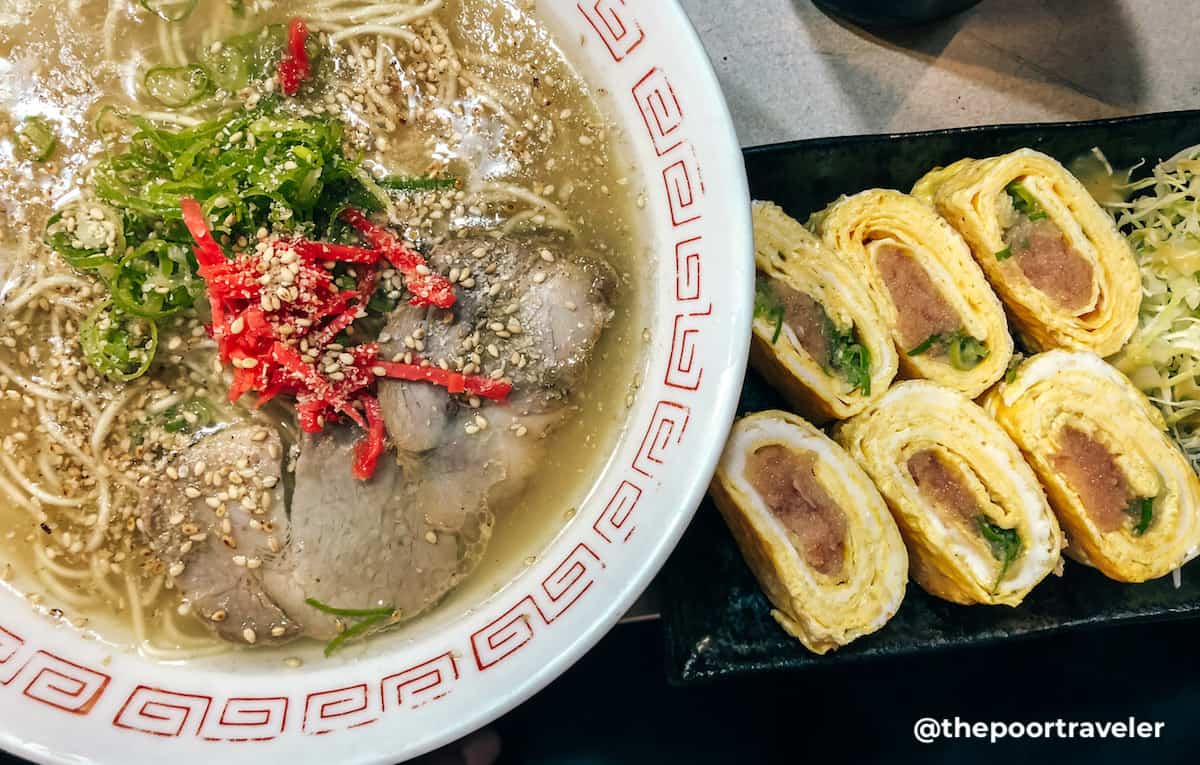

Tenjin Yatai Mune is another yatai that I have fond memories of. My friend Irene, who resided in Fukuoka at the time, brought me to this humble food stall at the south end of Tenjin Station. It’s located right here.
This unassuming stall gave me the best cheap ramen I had in the city. The dish was very simple. It was just a bowl of Hakata ramen topped with thin slices of pork, red pickled ginger, and sesame seeds. But it was dynamite. Many of the ones I had tried before this was a bit bland for my taste, but this broth was rich and flavorful, and the sesame seeds added a nice finish. And it was only ¥700.
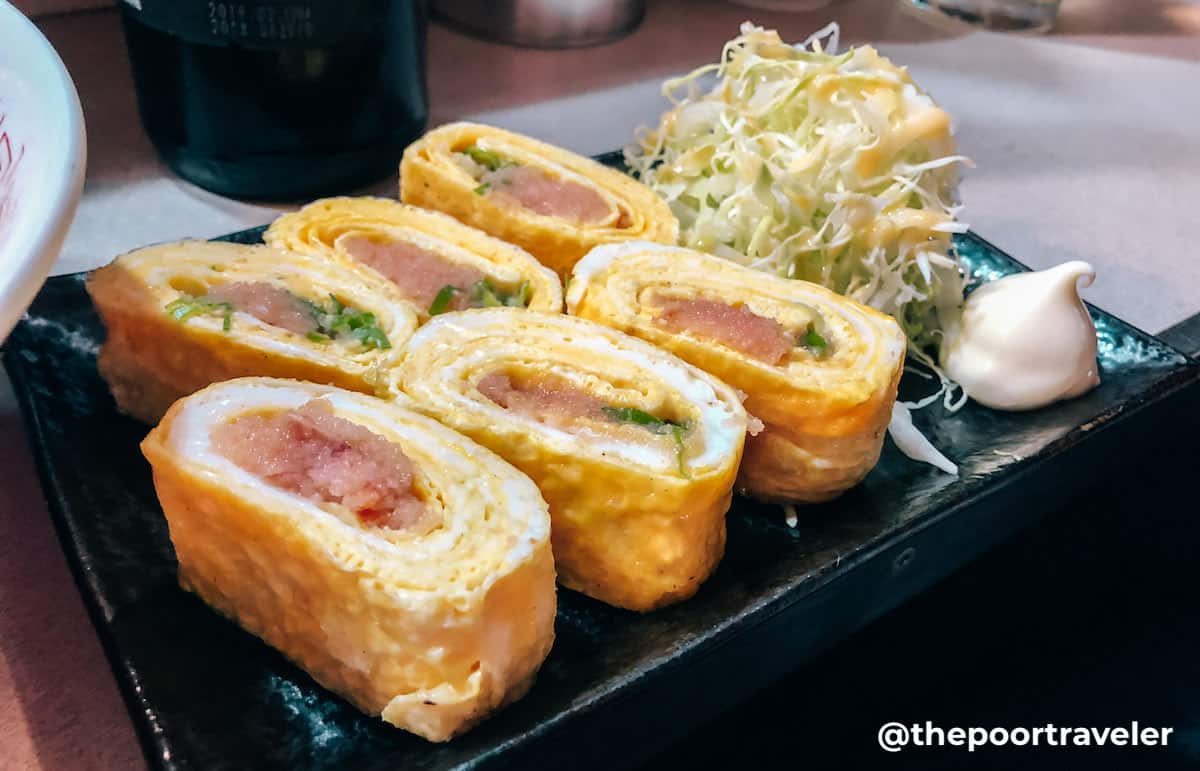
Fukuoka is also popular for mentaiko (salted or spiced pollock roe), which originated in Korea and was brought to Japanese shores in 1949 by Busan-born Toshio Kawahara. So just to have a taste of it, I ordered mentai tamagoyaki (¥900), which is basically several layers of rolled omelette with pollock roe at its core, served with greens and mayonnaise. The combination looks weird at first, but they all work together to create a light, well-rounded appetizer. (This was served before the ramen.) The roe added a briny burst to every bite of the soft and creamy tamago.

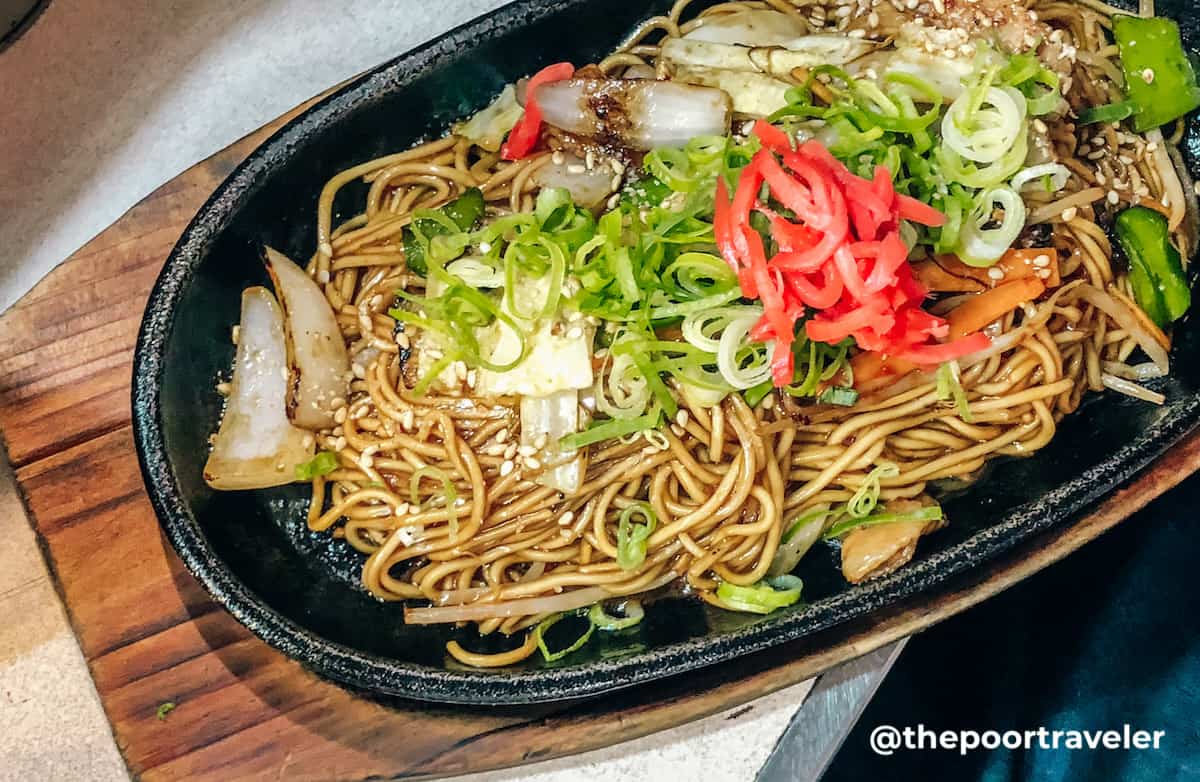

We ended the night with yaki-ramen or fried ramen (¥900), another local creation, usually cooked with vegetables and red pickled ginger. I have a thing for stir-fried noodles in thick soy-based sauce, so this one is right up my alley. The taste is a blend of sweet, salty and tangy. My only complaint was that because it was our last stop that night, I could not find enough space in my tummy for it, but I still managed to finish it. Because talent. LOL.
TENJIN YATAI MUNE
Operating Hours: Monday – Wednesday & Friday – Saturday, 6:30 PM – 11:30 PM; Thursday & Sunday, CLOSED. To double-check, you can contact them through this number: +81 90-8665-1692
Nearest Stations: Tenjin Station
Chez Remy – Yatai (Fukuoka City)
Yes, a yatai serving French food! Who would have thought?
It’s is located close to Tenjin Yatai Mune, just two stalls apart. Adding a French twist to the Japanese yatai concept, Chez Remy looks just like your ordinary food cart stationed by the side of the road, but it whips out plate after plate of French delicacies like garlic butter escargot (¥850) and mussels in wine (¥750), and French-Japanese fusion pieces.

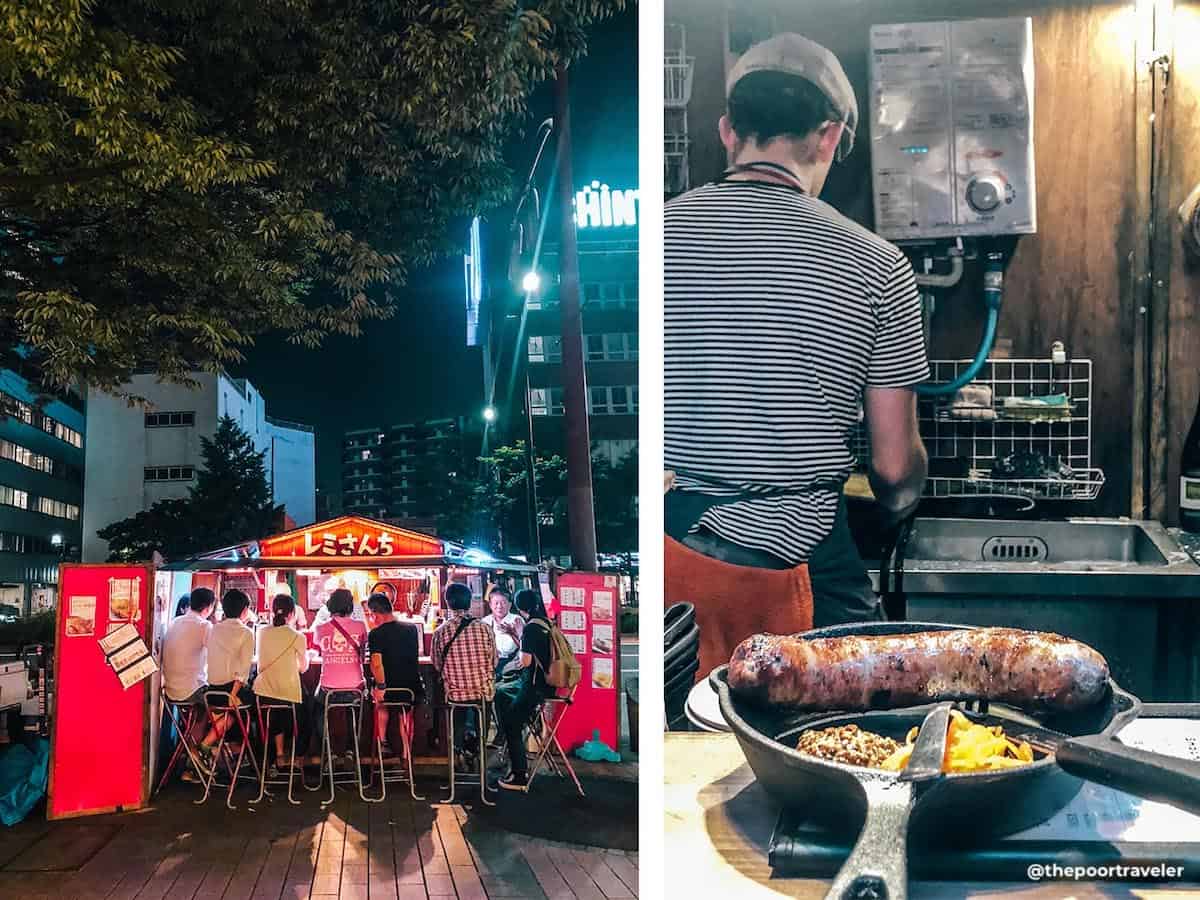

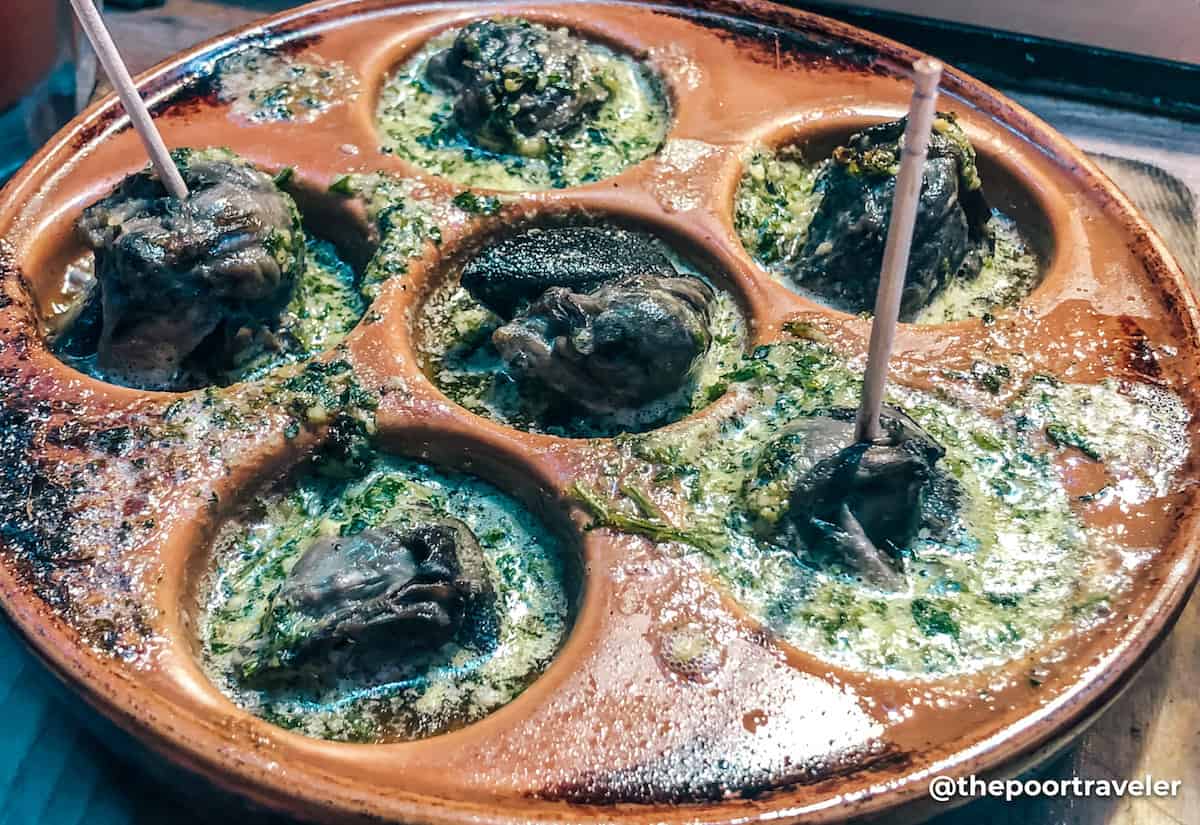
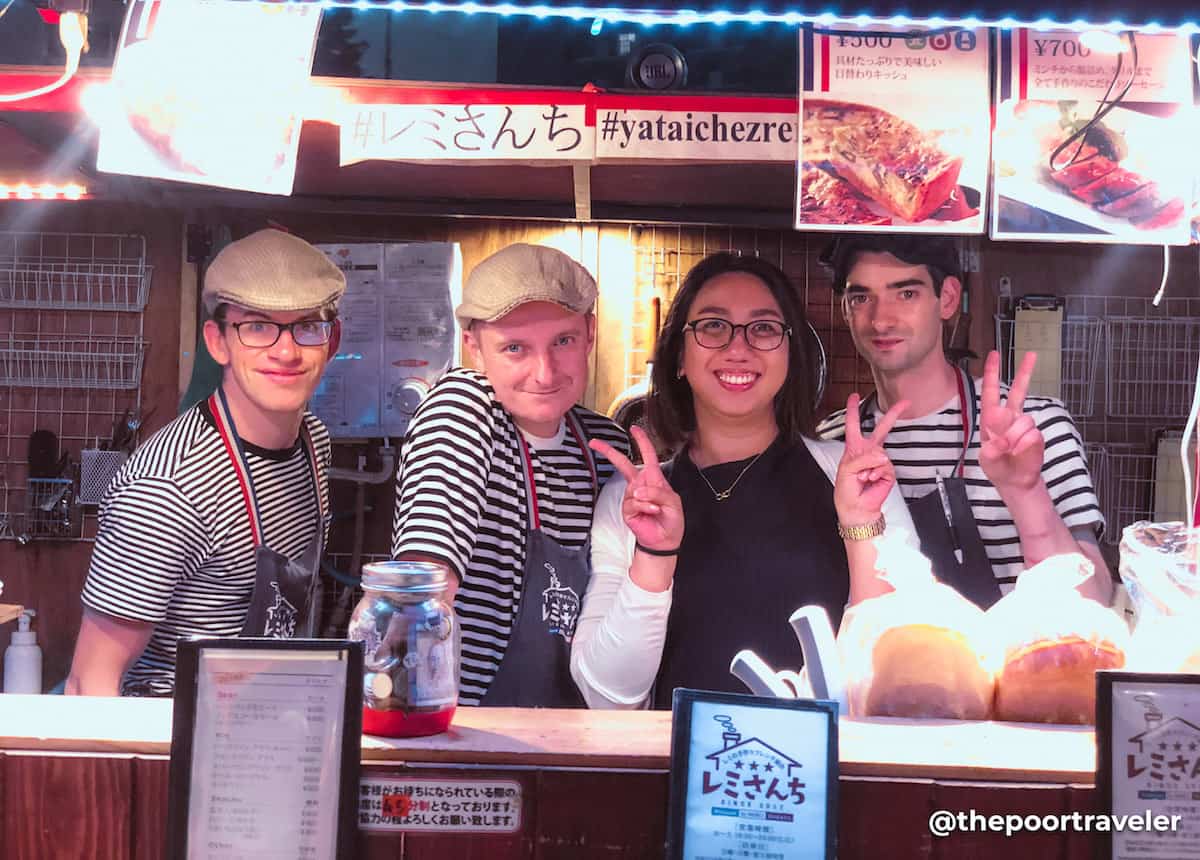

My friend Irene and I split the six pieces of escargot. The butter didn’t overpower the snail meat, which was tender. I also ordered pork knuckles with mustard because I told you I adore unhealthy food! Everything from the skin to the bone was so soft. They melt in your mouth, except the bones, which required a bit chewing. Yes, I did. Everything that went into my mouth from that plate went down. And oh, you can have a glass of sparkling wine too (¥600 at the time)!
CHEZ REMY
Operating Hours: Tuesday to Thursday, 6:00 PM – 12:00 AM; Friday to Saturday, 6:00 PM – 1:00 AM; Sunday & Monday, CLOSED. Always check the official Facebook page before going.
Nearest Stations: Tenjin Station
Shin Shin (Fukuoka City)
We can’t talk about ramen in Fukuoka without mentioning Shin Shin, beloved by locals and visitors alike. This ramen shop has several branches scattered around the prefecture, and we got to try two, in Tenjin and at Hakata Station.
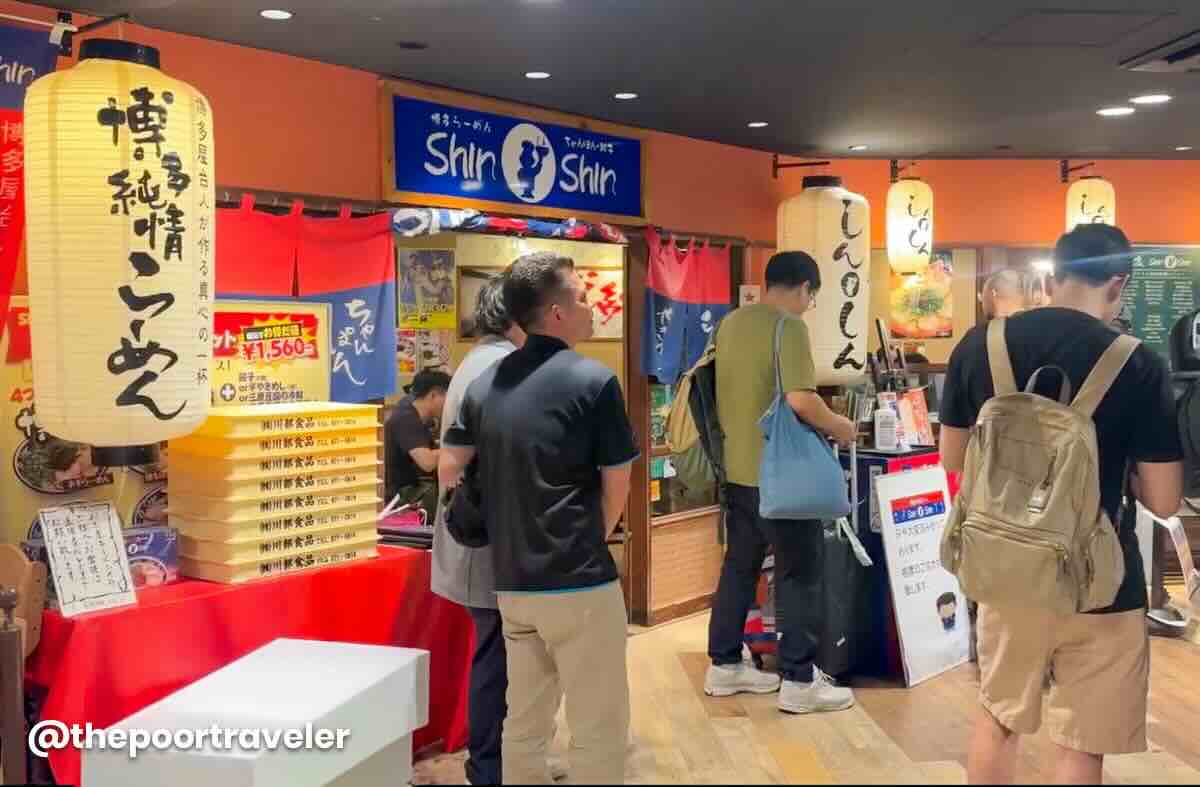

Their pork bone ramen or tonkotsu ramen (¥930-1110) is rich but not heavy, the kind that feels silky on your tongue. The broth has that perfect depth, very hearty, umami-packed, and just salty enough to make you slurp non-stop.
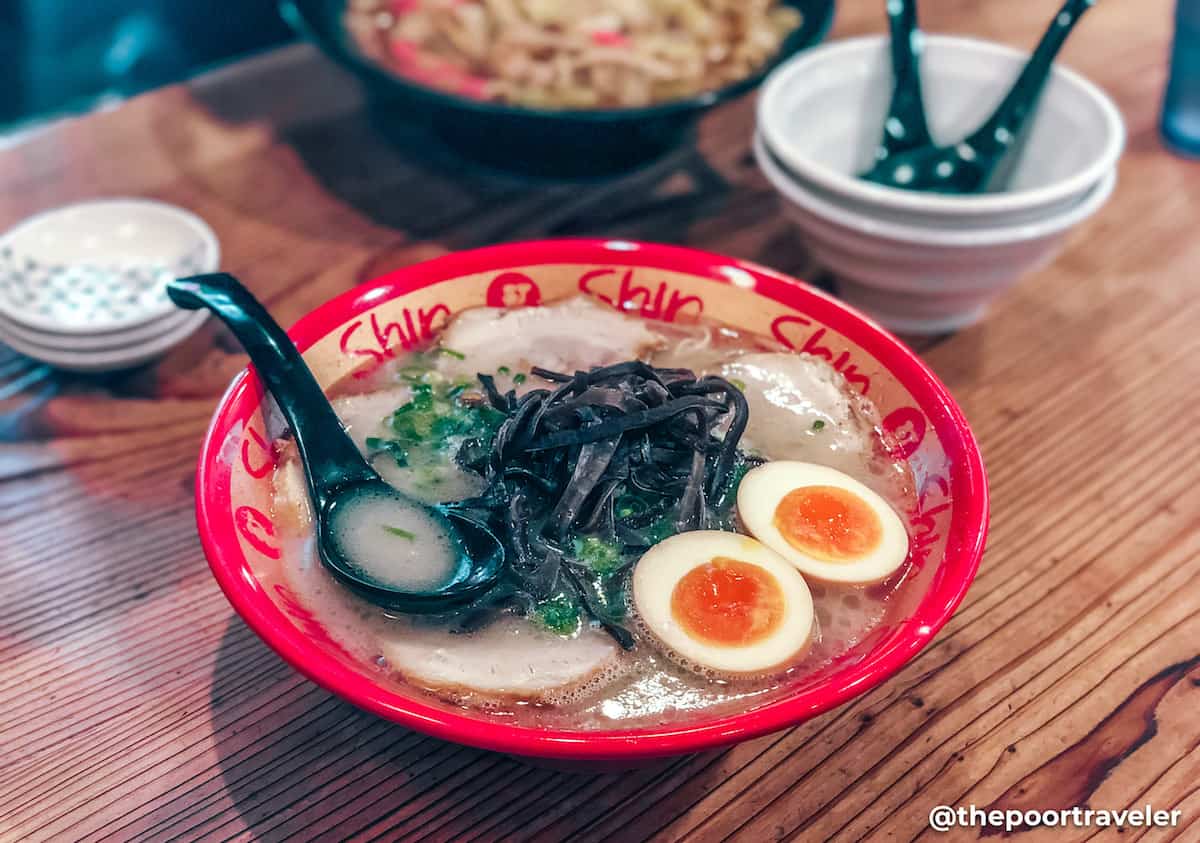

Of course, we couldn’t stop at ramen. Every visit, we also ordered their yakisoba and gyoza, both of which perfectly complemented the main bowl. The yakisoba (¥890) came out smoky with just the right chew, while the gyoza (¥520-590) are Fukuoka-style, bite-sized, and had that crisp, golden bottom that’s every dumpling lover’s dream. And because curiosity always wins, we even tried their champon (¥940) on another visit, a seafood noodle dish that’s more creamy and vegetable-y, showing Shin Shin’s range.
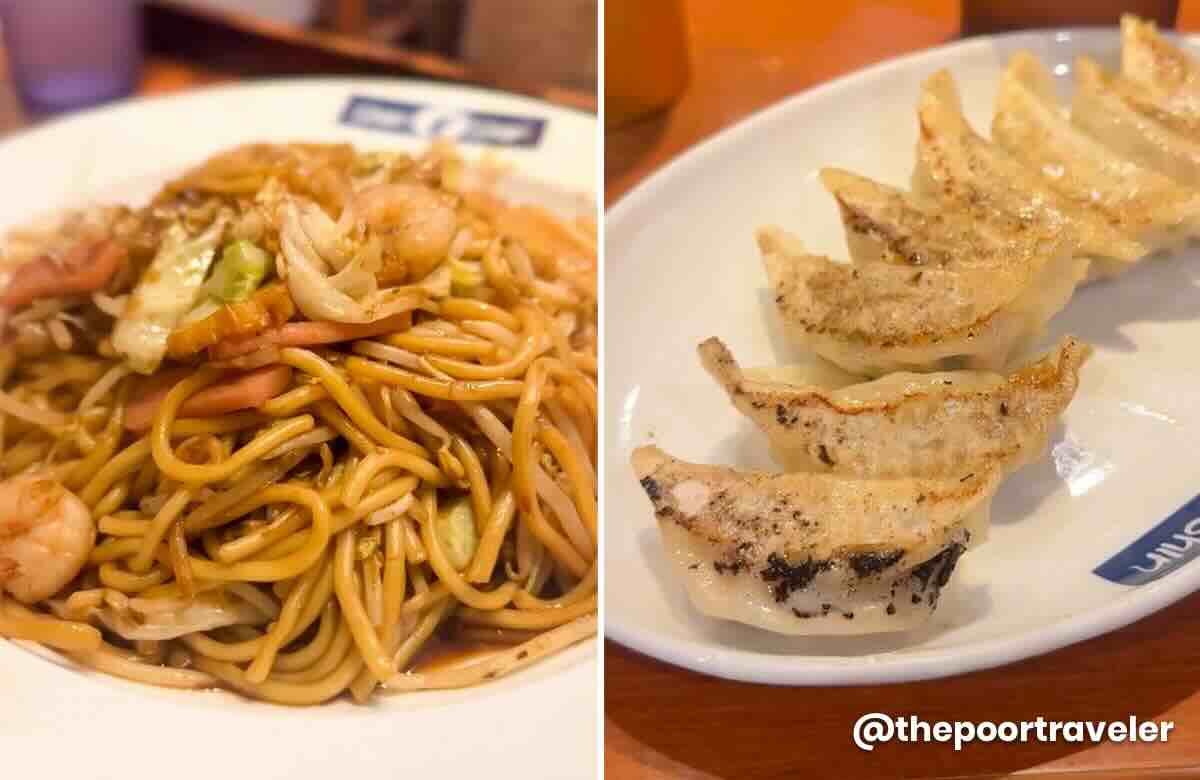
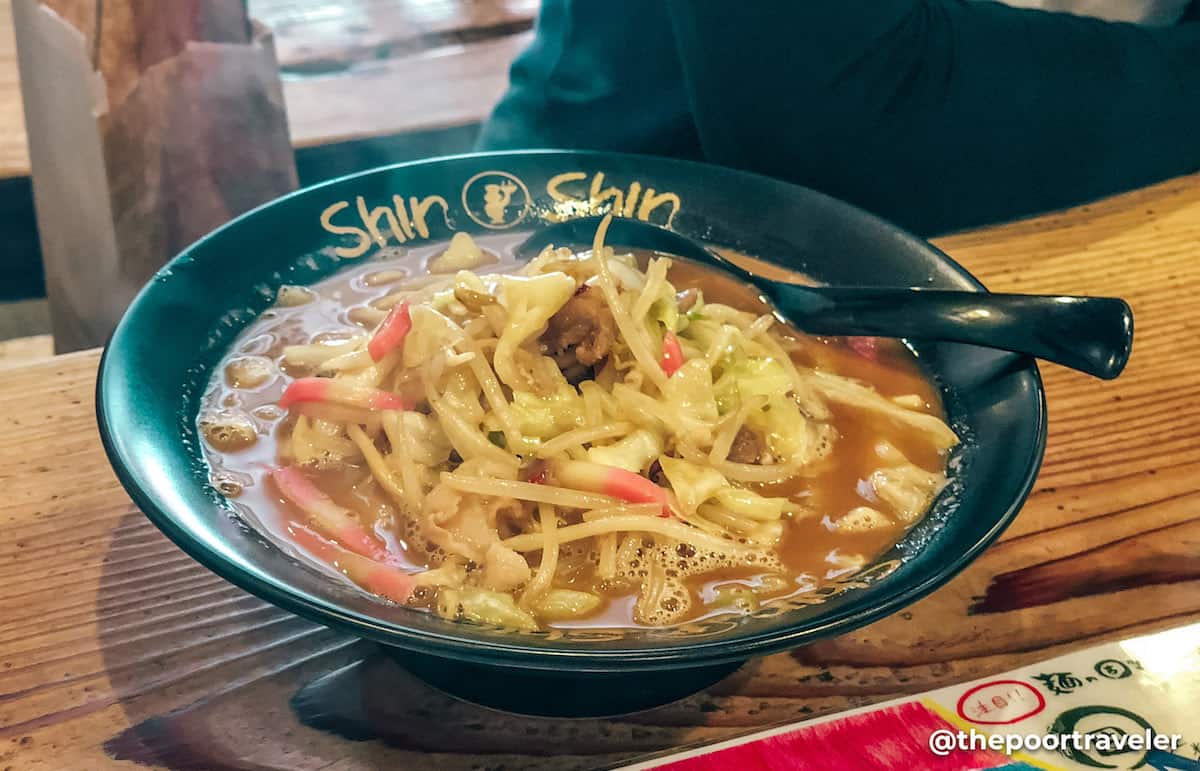
It’s not just the food that makes Shin Shin memorable; it’s the energy. You’ll see suited office workers grabbing a late-night fix, tourists photographing their steaming bowls, and staff shouting cheerful greetings in true Fukuoka fashion.
SHIN SHIN HAKATA STATION
Address: 1-1 Hakataekichuogai, Hakata Ward, Fukuoka, 812-0012, Japan
Operating Hours: Monday to Friday, 11:00 AM – 11:00 PM; Saturday to Sunday, 10:00 AM – 11:00 PM
How to Get There: From Hakata Station, you can just walk to the second floor of Hakata DEITOS.
Ichiran (Fukuoka City & Itoshima)
If Shin Shin is a local favorite, tourists seem to not get enough of Ichiran. You could say that it is the global ambassador of Fukuoka ramen, with several branches not just throughout Japan but abroad, too. They have stores in Hong Kong, Taipei, and even New York, and yes, we’ve tried them in all these cities, too.
Unlike Shin Shin’s lively, communal vibe, Ichiran’s concept is famously introversive (or introspective, if you will). You sit in a small booth, separated by partitions, focused entirely on your ramen. There’s no small talk, no distractions: just you, your chopsticks, and a tempting bowl of pork bone broth and thin noodles. The broth is savory and flavorful, the noodles thin and firm, and the spicy red sauce in the center adds just the right kick. And while locals prefer smaller and more affordable ramen’ya, for first-timers and tourists, it’s a rite of passage.
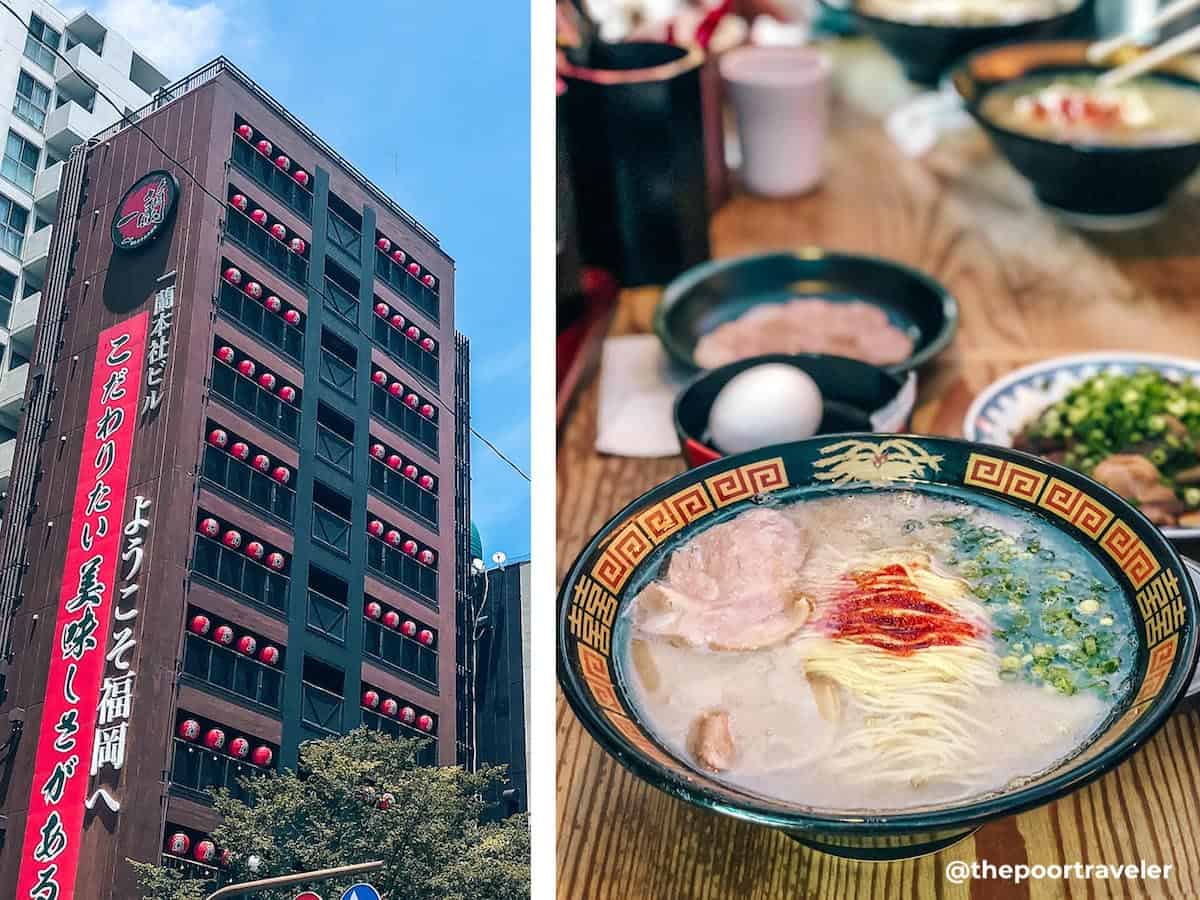
If you’re an Ichiran fan, don’t miss the chance to dine at the Ichiran Original Shop. You can call it the HQ of all Ichiran. Aside from the private cubicles, they also have the more usual table setup. They also serve ramen in bowls of other unorthodox shapes.
ICHIRAN ORIGINAL SHOP
Address: 5 Chome-3-2 Nakasu, Hakata Ward, Fukuoka, 810-0801, Japan
Operating Hours: 24/7
Nearest Station: Nakasukawabata Station (Airport Line)
But if you’re an Ichiran SUPER-fan, make the pilgrimage to Ichiran no Mori in Itoshima. It’s more than a ramen restaurant. It’s part museum, part factory, part culinary journey. You can see how the noodles are made, learn the brand’s history, and of course, enjoy a fresh bowl right at the source. Surrounded by trees and serenity, it’s the ultimate Ichiran experience.
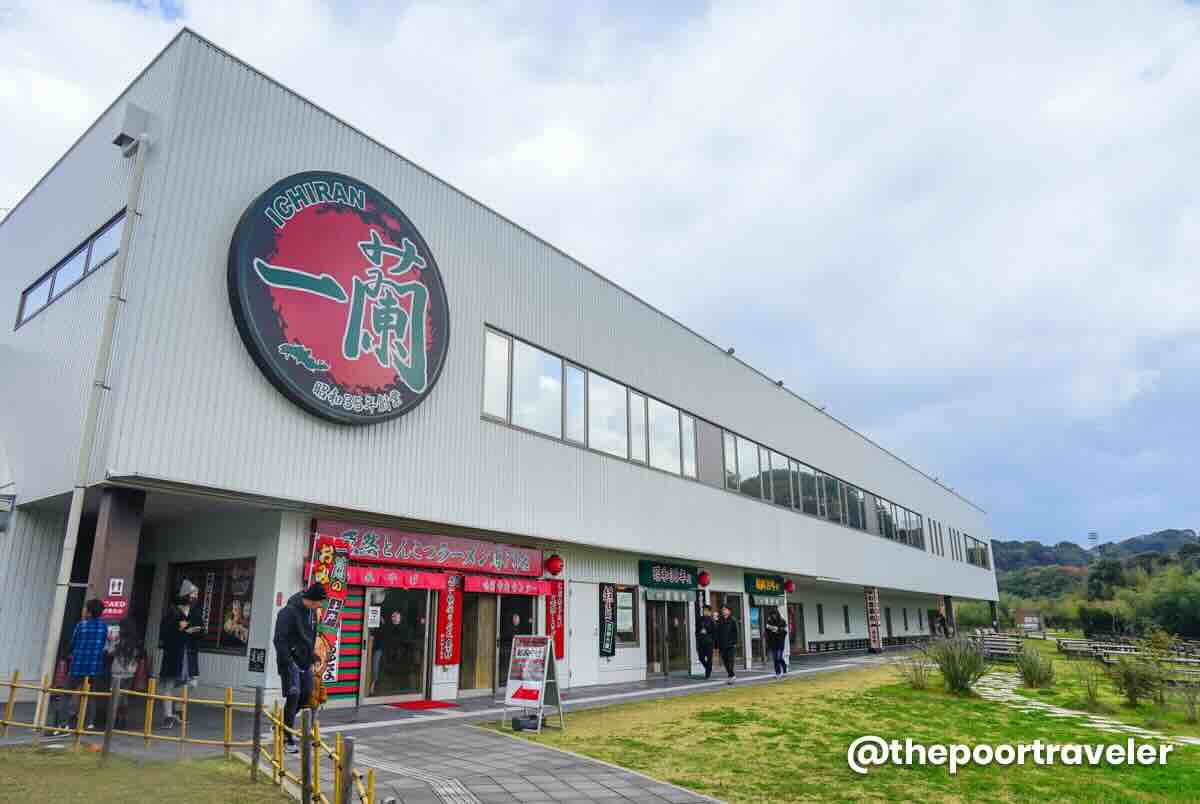

ICHIRAN NO MORI
Address: 256-10 Shimamatsuguma, Itoshima, Fukuoka 819-1306, Japan
Operating Hours: Daily, 10:00 AM – 04:00 PM
How to Get There: From Hakata Station, take the Airport Line to Kyūdai-Gakkentoshi Station. Then transfer to Kyushu University Line 2A Bus (九州大学線2A) to Ichiran Forest Itoshima Stop (一蘭の森 糸島)
Sushiyatai Uminoiro (Fukutsu)

Sushi places take pride in their fresh fish, as they should. But here at Sushiyatai Uminoiro, it’s also about the atmosphere. It became evident as soon as we sat facing the chef preparing our sushi, and behind him, a window that perfectly frames the beach. I don’t think I could ever get used to watching the gentle waves roll by as a plate of glistening nigiri is set before you.
We had their omakase set, which is composed of 10 pieces of sushi, miso soup, a small bowl of vegetables, and a cup of chawanmushi, a smooth, savory steamed Japanese egg custard with dashi.
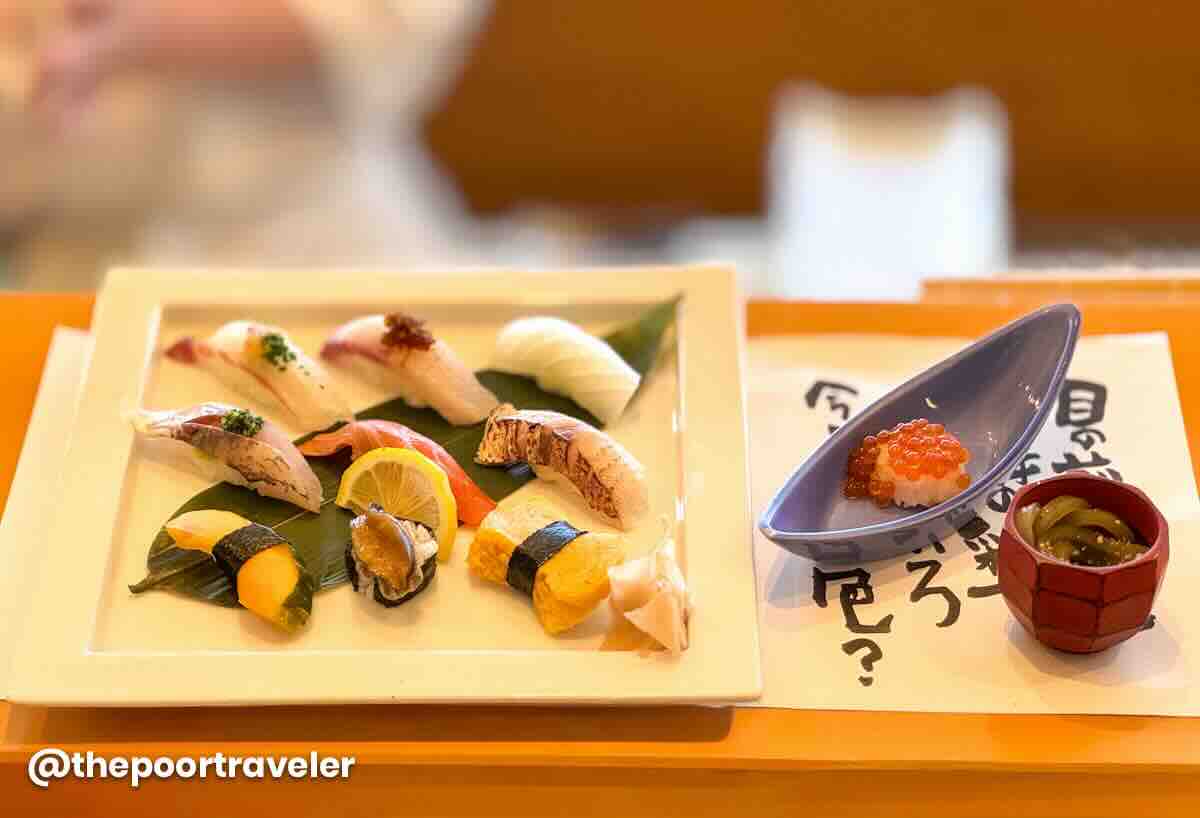

But of course, the main star here is the sushi. Each piece is cut with care and precision, then placed over a clump of wasabi-flavored rice. (You can opt without wasabi if you prefer.) The tuna was so tender, the sea bream (tai) had that clean, briny brightness, the ika or squid had that natural sweetness, and the abalone was still moving! The tenth piece was served in a bowl, topped with a generous portion of ikura or salmon roe. They even asked if we wanted more, and of course, I said YES! And they added more ikura, which was wonderful.
What I loved most about Uminoiro is the calm. This is what sushi was meant to be — no conveyor belts, no gimmiks — just sushi, sea, and stillness. And oh, I bought bottles of yuzu and kabosu sauces, too!
SUSHIYATAI UMINOIRO
Address: 4 Chome-10-10 Nishifukuma, Fukutsu, Fukuoka 811-3219, Japan
Operating Hours: Monday, Wednesday, Thursday & Friday, 11:30 AM – 3:00 PM, 5:30 PM – 9:00 PM; Saturday to Sunday, 11:00 AM – 3:00 PM, 5:00 PM-9:00 PM; Tuesdays, CLOSED
How to Get There: From Hakata Station, take the Sonic-Nichirin-Hyuga Line to Fukuma Station. Then walk for 28 minutes or take a cab to Sushiyatai Uminoiro.
Tanga Market (Kitakyushu)
Yes, you read it right, but you’re probably pronouncing it wrong. It’s called Tanga Market! [Context: Tanga means “stupid” in Filipino, but it’s pronounced differently.]
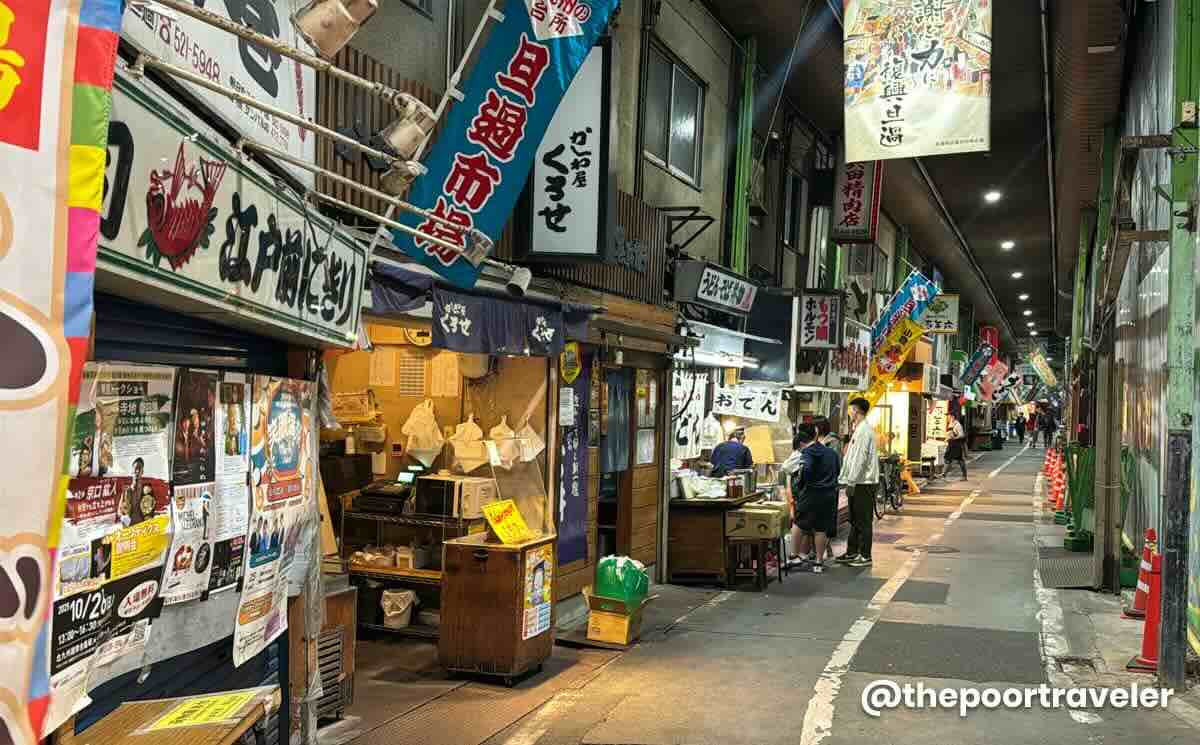

And visiting Kitakyushu is definitely a “wise” move! There’s a lot to see and do here. If Kitakyushu is part of your itinerary, consider a stop here.
Tanga Market in Kitakyushu’s Kokura district is a time capsule of local life. It’s where grandmas, office workers, and chefs all cross paths. It’s often called the “kitchen of Kitakyushu,” and once you walk through its narrow lanes, you’ll understand why. The air is thick with the scent of grilled fish and soy sauce, and every few steps, there’s something delicious to catch your attention.


One of the most intriguing local specialties here is nukadaki, a traditional dish of fish marinated and simmered in nuka (fermented rice bran). It sounds rustic, but it’s also a perfect example of Japan’s genius for turning simplicity into depth. The fish is tender and infused with a savory, miso aroma. But it’s not a novelty. It’s a flavor profile that has stood the test of time.
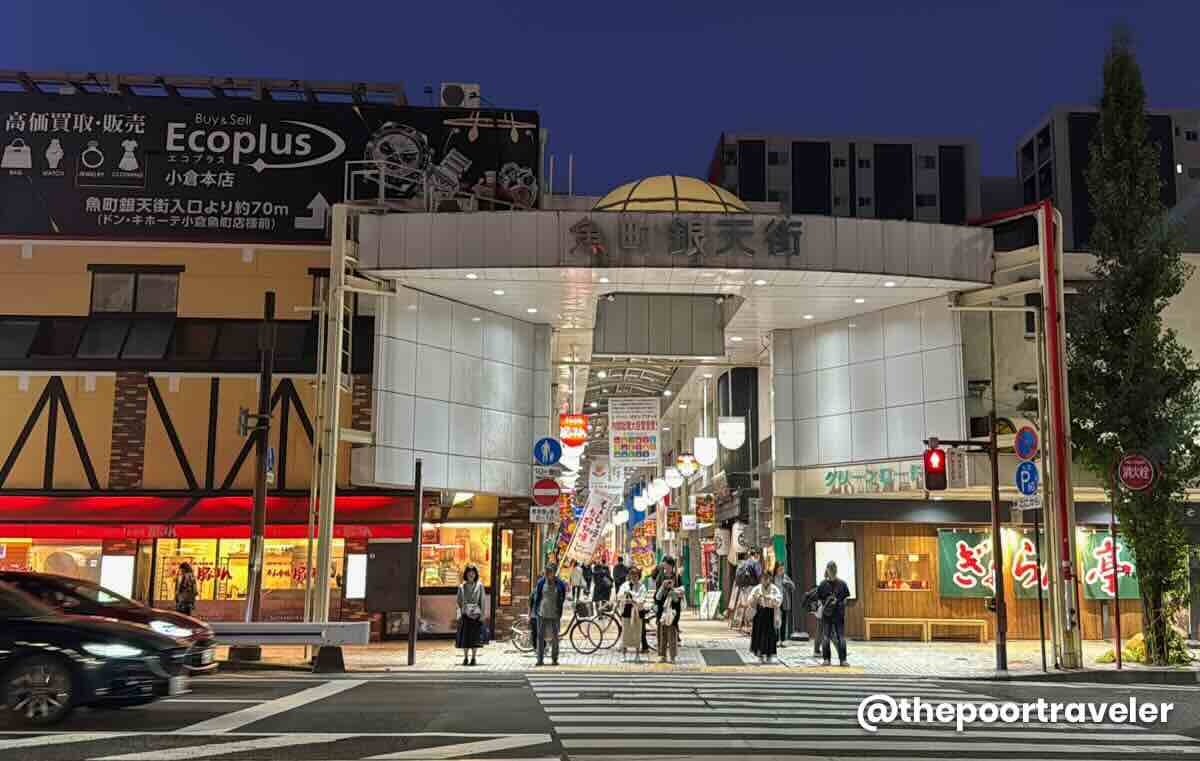

After wandering through Tanga, we ended up in Uomachi Gintengai, regarded as the oldest shopping arcade in Japan, or at least the first to ever use the term ginten-gai (銀天街), which means “silver-covered street.” If you prefer a proper sit-down experience to a market stall, you can find a good place to eat here, as it is lined with restaurants, cafés, and izakayas. In fact, it is here that we found the next item on our list.
TANGA MARKET
Address: 4-2-18 Uomachi (魚町) / 4-2-8 Uomachi, Kokurakita Ward, Kitakyushu City, Fukuoka 802-0006, Japan
Operating Hours: They vary by store, but typical opening is 10:00 AM to 5:00/6:00 PM. Closed or varying store hours on some days.
Nearest Station: Kokura Station
Kokura Tetsunabe Sohonten (Kitakyushu)


If there’s one thing that perfectly captures Fukuoka prefecture’s knack for hearty yet unpretentious food, it’s the tetsunabe gyoza. These pan-fried dumplings are served sizzling on a small iron plate.
We tried it at Kokura Tetsunabe Sohonten, and honestly, it was love at third bite. At first, I thought, “Okay, these are good, a bit more dough than filling.” But then the second piece came, and the third, and I began to appreciate it more. Suddenly, the plate was empty. That’s how sneaky this dish is. It hooks you quietly and completely.
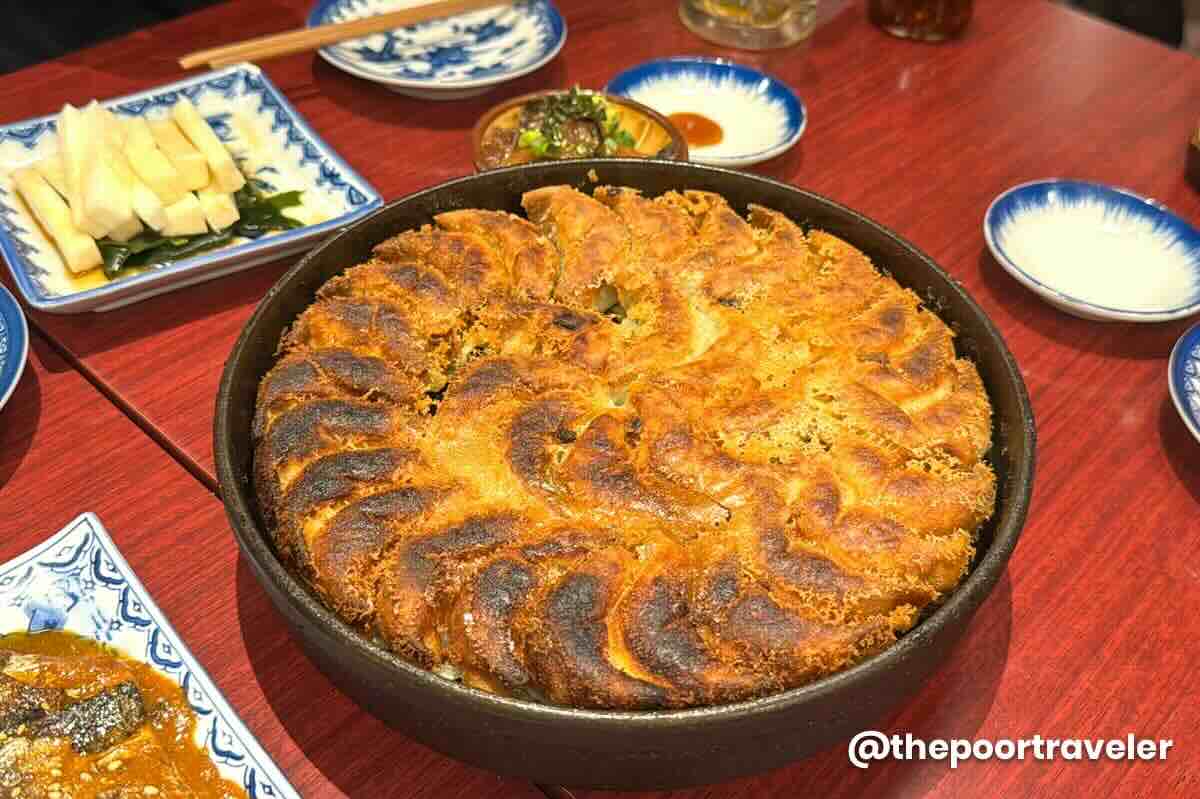

Their signature gyoza are smaller than the sizes we are more familiar with. They come out piping hot on the pan, best enjoyed with a glass of beer or highball in hand. The contrast of textures is what makes it addictive: the crisp skin, the juicy filling, the slight smokiness from the iron plate. A serving is eight (8) pieces at ¥680, but a minimum of two servings is required per order. This plate in the photo is four (4) servings, with 32 pieces of gyoza.

We also had a small bowl of sliced raw mackerel, locally called saba (¥700), and served with soy sauce and vinegar sauce. We also tried their salted pork tongue (¥660) with shallots and nukadaki (¥600), which in this case was mackerel in miso marinade. The saba and nukadaki were my favorites. They were savory, rich, and deeply satisfying.
KOKURA TETSUNABE SOHONTEN
Address: 2 Chome-3-12 Uomachi, Kokurakita Ward, Kitakyushu, Fukuoka 802-0006, Japan
Operating Hours: Daily, 11:00 AM – 11:00 PM
How to Get There: From Kokura Station, you can walk for seven minutes to the restaurant. Alternatively, you can take the Kitakyushu Monorail to Heiwadōri Station. Then walk for three minutes.
Nogata Ganda Bikkuriichi (Nogata)
Nogata Ganda Bikkuriichi is an unexpected gem! The name says it all. Bikkuri means “surprise,” and that’s exactly what this place delivers. Surprising because of the taste AND the price.


Inside this complex, you’ll find a food hall, where most of the sushi are priced at ¥100 and up apiece, and they actually taste great! They are clean and bright, and really fresh. The yakitori is ¥130 per stick, and the servings are big, not the three-piece staples at izakayas. They’re available in shoyu and shio options, but both are smoky, juicy, and freshly grilled right in front of you.
As though that wasn’t enough, as we explored more of the place, we found a stall selling ramen (¥400; ¥500 if with chashu). And I swear, it tastes almost like Ichiran (very similar profile) but for less than half the price. Talk about budget travel bliss.


There’s nothing fancy about this place: fluorescent lights, casual counters, and plastic trays. But that’s all part of the charm. It’s where locals go, and everyone seems to be smiling. You can order piece by piece, or just give in to temptation and go full-on feast mode as we did!
Places like Bikkuriichi remind you that good food doesn’t need to be expensive or complicated. Sometimes, it’s the casual joints that leave the strongest impression.
It’s incredibly local. It’s not along the usual tourist trail, a bit far from Fukuoka City, Kitakyushu, or any other major tourist attraction. If you’re taking public transportation, it can take a lot of time and effort, and it’s hard to position it in an itinerary. But if you’re on a road trip and it’s along the way, it’s definitely worth a stop.
NOGATA GANDA BIKKURIICHI
Address: 611 Ganda, Nogata, Fukuoka 822-0001, Japan
Operating Hours: Friday, Saturday & Sunday, 09:00 AM – 07:00 PM
How to Get There: From Hakata Station or Kokura Station, take the Kagoshima Line to Kurosaki Station. Then switch to Chikuho Denkitetsudo to Ganda Station. Then walk for 18 minutes.
Juhachi Yoshii (Ukiha)
Yoshii is a charming little town known for its white-walled storehouses and well-preserved Edo-period streets. And here, you’ll find Juhachi Yoshii, a countryside restaurant, lauded for its duck and pork dishes. Vins doesn’t eat duck, so we stuck with its pork specialties.
In fact, even their sukiyaki (which is traditionally beef) is pork! Thin slices of pork simmered in a sweet-savory broth with tofu, vegetables, mushrooms, and noodles. It’s our first pork sukiyaki ever, and it was glorious. Each bite was tender and comforting.
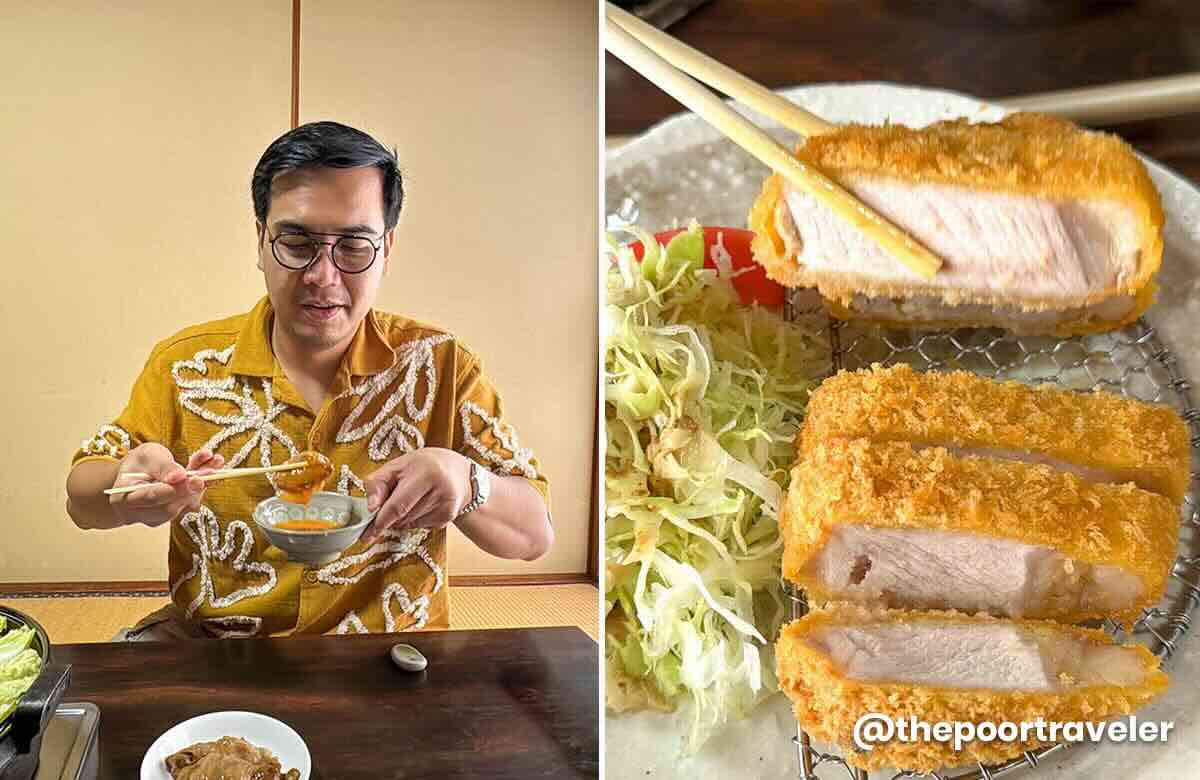
Then came the tonkatsu. Super thick, incredibly juicy pork cutlet, fried to golden perfection. The crust had that ideal crunch, while the meat inside stayed moist and flavorful. You can tell they use quality ingredients, especially their meat. The chef even met us after the meal, and he takes pride in every dish.
It’s located in Yoshii in Ukiha, so it’s best to visit this as a lunch or dinner stop while exploring Yoshii Town or if Yoshii is already a part of your itinerary.
JUHACHI YOSHII
Address: 102-5 Yoshiimachi Fukumasu, Ukiha, Fukuoka 839-1332, Japan
Operating Hours: Monday to Tuesday, Thursday to Saturday, 11:30 AM – 09:00 PM; Sunday, 12:00 PM – 09:00 PM; Sundays, CLOSED
Nearest Station: Chikugo-Yoshii Station. Then walk for 10 minutes.
Ringo To Budō No Ki (Asakura)
We spent a morning picking apples, persimmons, and grapes here at Ringo To Budō No Ki. I usually do not expect much from cafés at tourist spots, but whoa! This cozy café blew me away.
When we entered, I was already mesmerized by their display case full of pies. But when our order arrived, I kid you not — it was the best apple pie of my life!
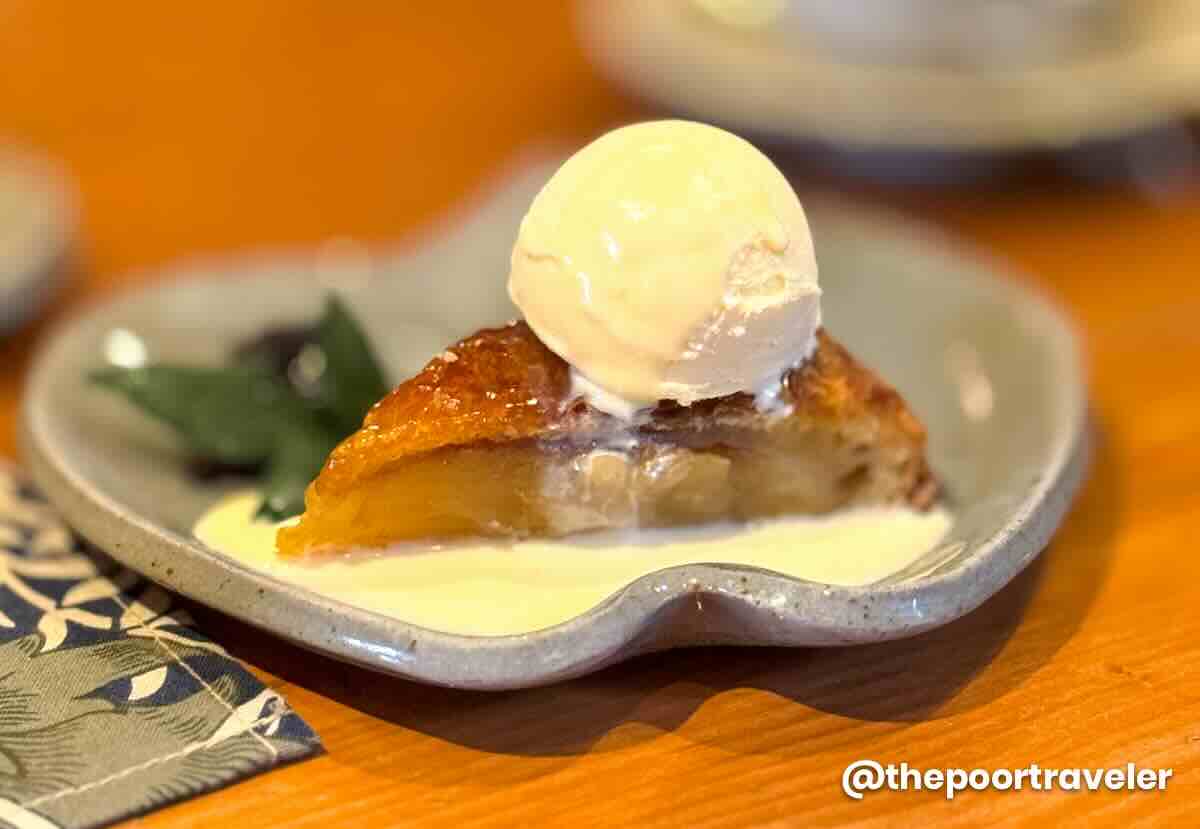

Granted, I haven’t tried that many apple pies, but this one set the bar ridiculously high. The crust was flaky, the filling had just the right balance of sweet and tart, and the apples were so smooth and silky. But again, I haven’t tried that many apple pies, so don’t trust my word for it. Go try it yourself next time you’re in Fukuoka!
Anyway, there was something poetic about eating an apple pie after picking apples ourselves.
You can find this café in Asakura, not within Fukuoka City or Kitakyushu, but still part of Fukuoka Prefecture. You’ll find a lot of places to see here in Asakura and nearby Ukiha, mostly agricultural and cultural attractions. And if you decide to explore this part of the prefecture, consider stopping by this site.
RINGO TO BUDOU NO KI
Address: Yamada, Asakura, Fukuoka 838-1306, Japan
Operating Hours: Daily, 10:00 AM – 6:00 PM
How to Get There: From Hakata Station, take the Kagoshima Line to Futsukaichi Station. Switch to Bus 40 bound for Haki and get off at Sanrensuisha-no-sato stop. Walk for 14 minutes to the orchard.
Tokinose (Umi)
Our next stop is located just next to Umi Hachimangu Shrine. This is Tokinose, a shop selling wagashi (traditional Japanese sweets). Wagashi comes in all shapes and colors, employing various methods. Often, they can get pretty artistic too, reflecting the changing seasons.
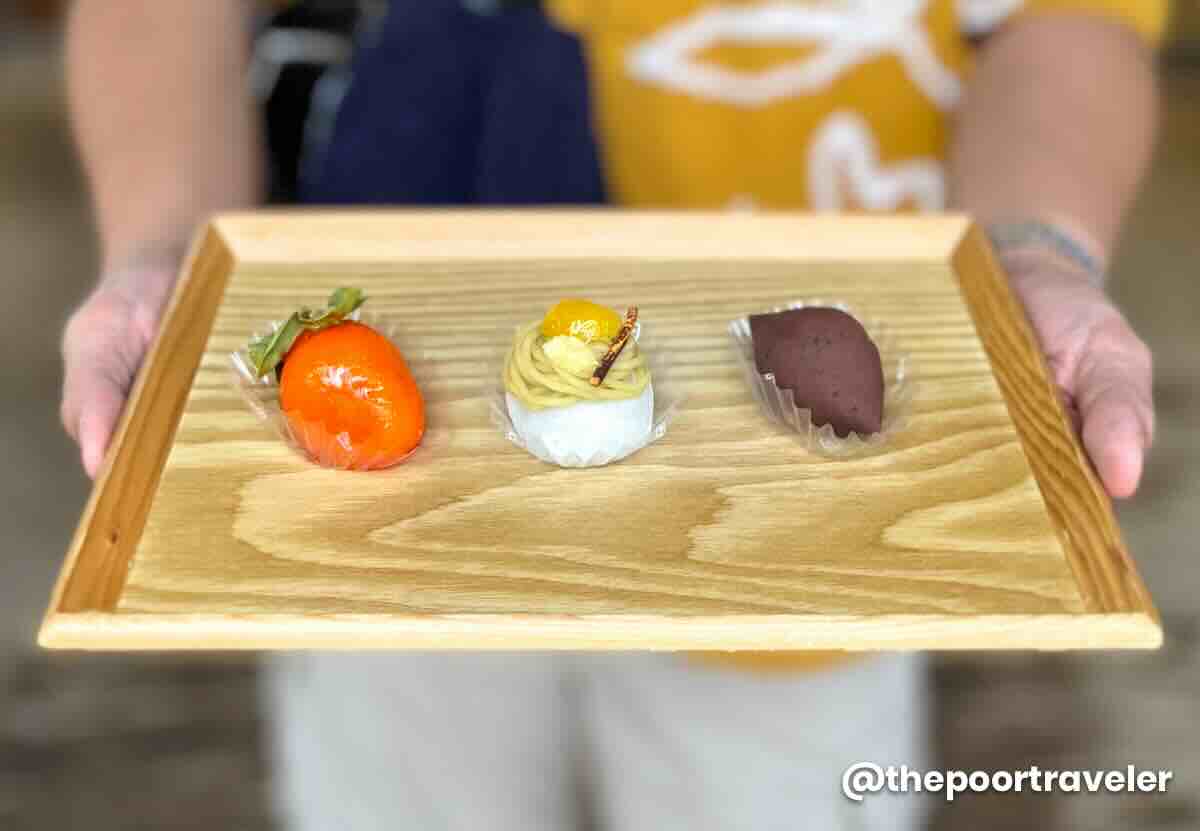

Since it was autumn, we decided to go for seasonal treats that showcased the best of the season’s ingredients.
The one we got was so kawaii! It looked like a cute persimmon because persimmon is a main ingredient. It’s called Aki Kitashi, a jyouyo manjyu or yam-based sweet bun, filled with bean paste and dried persimmon from Ichida, wrapped in a layer of persimmon yokan (bean jelly).
There was another treat that looked like a tiny sweet potato, called Hokkori. It’s filled with sweet potato and wrapped in a purple sweet potato batter with a whisper of cinnamon. Both these pieces were not too sweet, which I always appreciate.
But the standout for us was the Mont-Blanc Daifuku, a limited-time-only masterpiece. It’s a soft habutae mochi filled with café au lait–flavored bean paste, topped with Japanese chestnut cream and a candied chestnut. The flavors were delicate and perfectly balanced — not too sweet, not too bold, just beautifully composed. It was immaculate.
TOKINOSE
Address: 1 Chome-1-24 Umi, Kasuya District, Fukuoka 811-2101, Japan
Operating Hours: Wednesday to Monday, 9:30 AM – 4:30 PM; Tuesdays, CLOSED
How to Get There: From Hakata Bus Terminal, take Bus 32 bound for Kami Umi. Get off at Umi Hachiman-mae Bus Stop. It’s just in front of the shrine. Travel time is 38 minutes.
Fukuoka Craft Brewing (Okagaki)
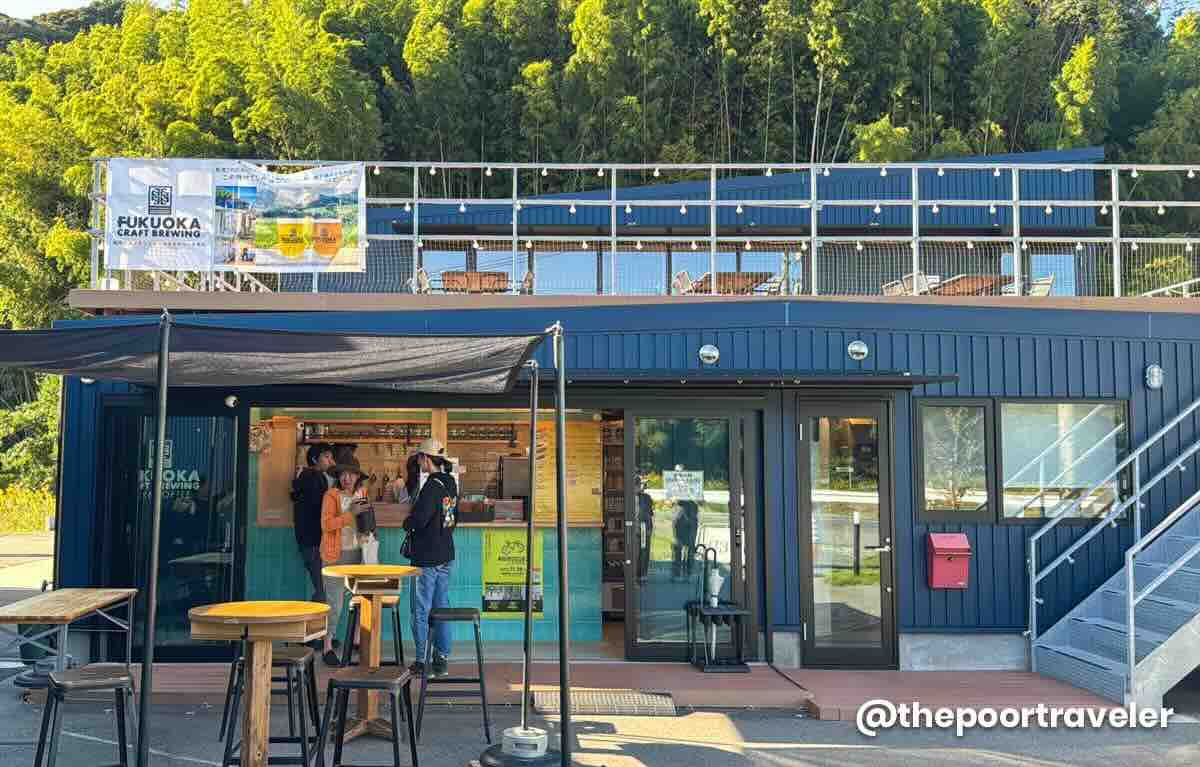

Of course, this list won’t be complete without at least one drink to wash it all down with! If you think Japan’s all about sake, wait until you visit Fukuoka Craft Brewing in Okagaki. The company has been around for about eight years, but the brewery site here has been operating for three years. We were lucky enough to be toured around the facility by the brewer himself, David Victor, whose enthusiasm could convert even non-beer drinkers into fans.
After getting acquainted with the whole brewing process, it was time for beer tasting, starting with a sampler of four beers (¥1500).
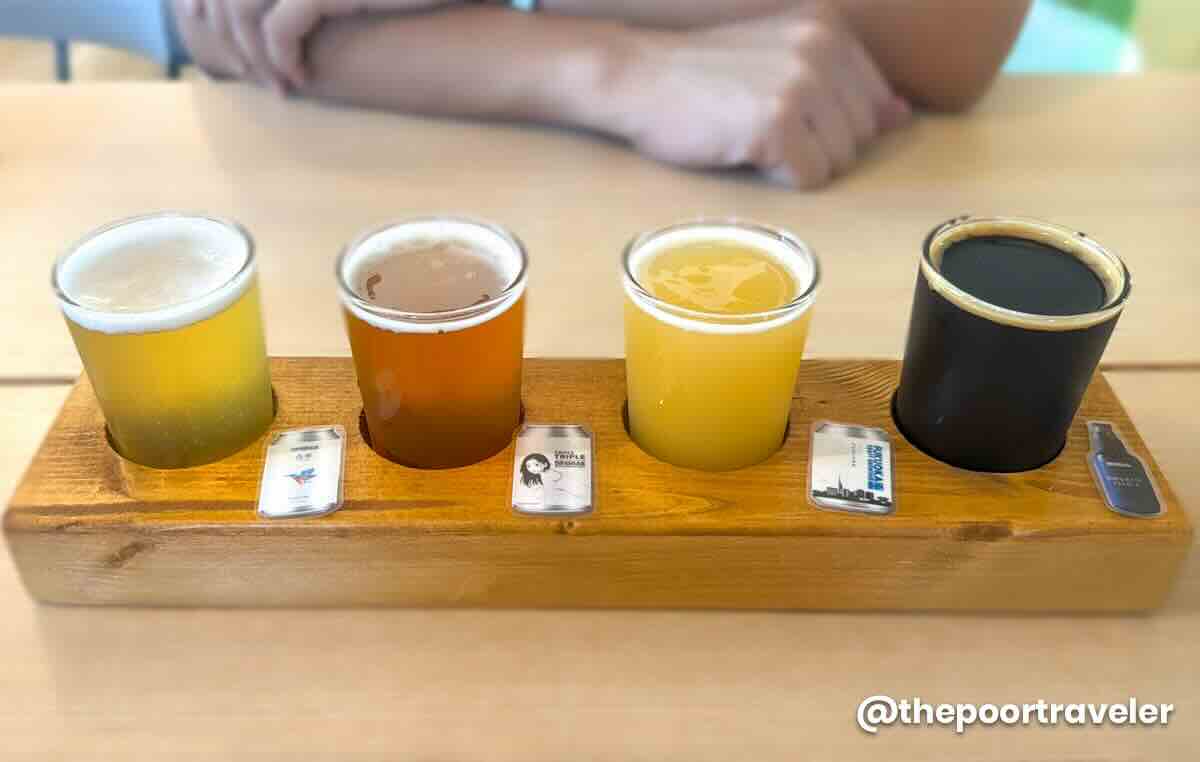

The Session IPA was light (at only 3% alcohol), almost juice-like until that pleasant bitterness kicked in. The Hazy IPA, cloudy and golden, had a tropical aroma and a slightly stronger punch at 6% alcohol. The Triple IPA was richer, hoppier, and boasted a bold 9%. And the Imperial Stout, with its roasted malt, was dark, full-bodied, and reminiscent of coffee and chocolate but smoky and punchy at 10% alcohol.
But what impressed us most was their willingness to experiment. The Rice Flower Ale, brewed with koji mold, had a sake-like sweetness and was very refreshing. Then there was the wild card, the Sea and Tomato Mexican Ale, inspired by micheladas, a Mexican beer cocktail with lime, tomato juice, and spices. It started with a briny, clam flavor, then the tomato kicked in, and finally a spicy heat crept up your throat. It’s strange, brave, and brilliant — like beer and salsa in one glass. It’s an acquired taste, to be honest, and I think I acquired it immediately.

The brewery is just a bit detached from other attractions, so you might find it out of the way if it’s the only place you’re visiting in the area. If you’re a beer lover willing to go the extra mile for it, taking public transportation is possible. But it’s best visited if you’re on the way from Fukutsu or Fukuoka City to Kitakyushu, or you’re on a road trip.
FUKUOKA CRAFT BREWING
Address: 544 Utsura, Okagaki, Onga District, Fukuoka 811-4203, Japan
Operating Hours: Friday to Sunday, 10:00 AM – 6:00 PM; Monday to Thursday, CLOSED
How to Get There: From Hakata Station, take the Kagoshima Line to Ebitsu Station. Then transfer to Bus 6 波津線 and alight at Uchiura. Then walk for 12 minutes to the brewery.
But you can also get a taste of their products in Fukuoka City, specifically at FUKUOKA CRAFT BREWING with COMATSU at Hakata DEITOS Annex, very close to Hakata Station. It’s also served at Fukuoka Craft by El Borracho in the city’s Daimyo District.
FUKUOKA CRAFT BREWING with COMATSU
Address: 1−1 デイトスアネックス 1F, Hakataekichuogai, Hakata Ward, Fukuoka 812-0012, Japan
Operating Hours: Daily, 11:00 AM – 2:00 AMFUKUOKA CRAFT by EL BORRACHO
Address: 1 Chome−11−4 どんぱビル, Daimyo, Chuo Ward, Fukuoka 810-0041, Japan
Operating Hours: Monday to Friday, 5:00 PM – 12:00 AM; Saturday to Sunday, 2:00 PM – 12:00 AM
Hakata Issou (Fukuoka City)
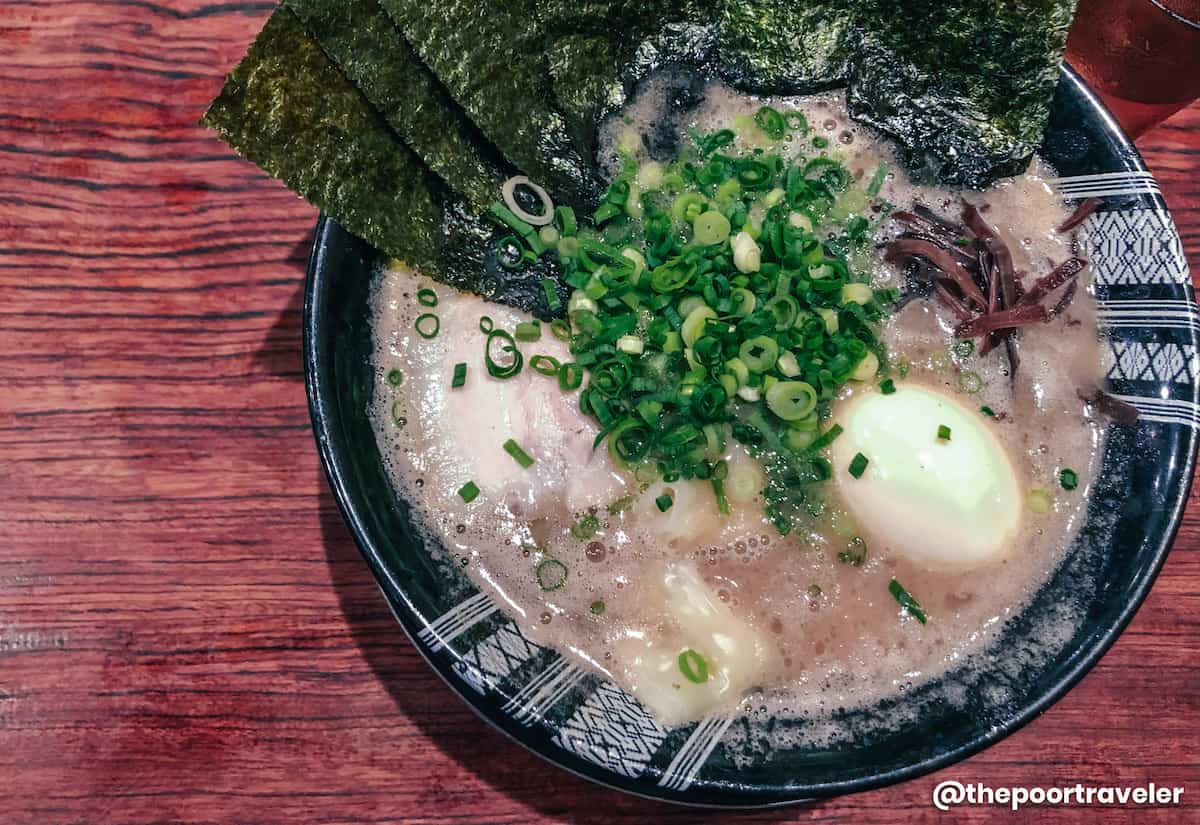
Hakata Issou is one of the most famous hakata ramen places in the city. It has two branches: one near Hakata Station and the other in Nakasu, the island in between Hakata and Tenjin. It is often included in lists of the best ramen shops by various publications. Their hakata ramen uses premium local pork and firm noodles topped with seaweed, pork belly, and green onions.
One thing I noticed immediately about their version of Hakata ramen is that it is frothy. In general, Hakata ramen’s stock is the kotteri type, which is creamy, cloudy and rich. But this one has a thin layer of foam on top. It also has a subtle bitter aftertaste, which prevents the umami taste from overpowering or lingering in the palate, but also makes it a little bit weird. I’m not totally sold on it. It tastes good, but I think I prefer Shin Shin.
Operating Hours: Daily, 7:00 PM – 4:30 AM
Nearest Stations: Nakasukawabata Station, Hakata Station
Motsunabe Rakutenchi (Fukuoka Airport)
We’d seen motsunabe all over Fukuoka: on signs, in guidebooks, in every local recommendation list. But somehow, after multiple trips, we never got around to trying it. That is, until our last day, at the airport of all places.
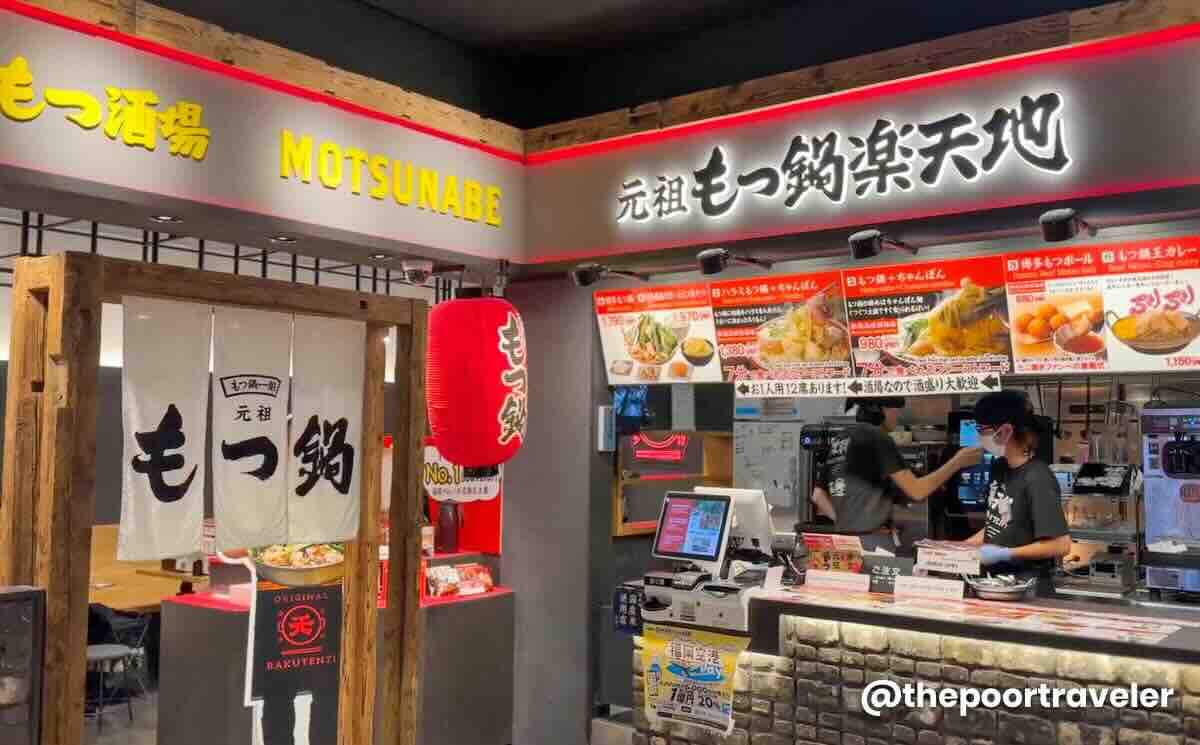
Inside Fukuoka Airport’s Hakata Food Hall, while looking for a dinner place before our flight, we spotted a branch of Motsunabe Rakutenchi, one of the city’s most beloved hotpot chains, and decided to make it our farewell meal. And what a goodbye it was.
Motsunabe (¥1790) is a Fukuoka specialty hotpot made with beef or pork offal, simmered in a flavorful broth with cabbage, garlic chives, and chili peppers. The offal might sound intimidating, but it’s tender and deeply flavorful, absorbing all the goodness of the broth without the stink or funky aftertaste. It reminded me so much of our very own nilaga, but richer and fuller, and with innards and more chives.

I love entrails, so I can’t believe I waited this long to finally try it. You can actually find it in other places in Japan, but it originated right here in Fukuoka. It’s a true local specialty. I’m sure there are better bowls of motsunabe in the city center, but it’s a warm, tasty introduction to the dish.
To me, motsunabe also kind of represents Fukuoka as a whole. From the ramen stalls of Nakasu to the countryside cafés of Yoshii, the dishes here aren’t trying to impress or intimidate. Rather, they’re trying to connect with you and celebrate food not as a luxury but as part of daily life. It’s a destination for eating your heart out in a way that is unapologetic and authentic, but still very welcoming and very Fukuoka.
MOTSUNABE RAKUTENCHI FUKUOKA AIRPORT
Address: ゲートラウンジエリア, 739 国際線旅客ターミナルビル 3階 Fukuoka Airport, Aoki, Hakata Ward, Fukuoka 812-0851, Japan
Operating Hours: Daily, 7:00 AM – 9:00 PM
How to Get There: After passing through Fukuoka Airport Immigration and Security checks, walk straight until you see Hakata Food Hall. Enter it and you’ll find it in the corner to your left, close to the Udon shop.
Which of the dishes we featured have you tried? And which are you most excited to try for the first time? Let’s talk in the comments section below!
Where to Stay in Fukuoka
The city has two major wards — Hakata and Tenjin. These two are dotted with restaurants, shopping establishments, and accommodations. Most of the attractions are found on Hakata side, while a lot of budget hotels are located in Tenjin. Here are some of the hotels that we tried recently:
🔥🔥🔥 Use AGODATPT for 10% off on select hotels! 🔥🔥🔥
The Poor Traveler readers and followers can now use a special discount code to score 10% discount, up to USD 100 (roughly PHP 5700)! To apply and avail of the promo code, visit AGODATPT Promo Code.
- S-Peria Hotel Hakata. Check Rates & Availability! ✅
- Super Hotel Premier Hakataeki. Check Rates & Availability! ✅
- THE BLOSSOM HAKATA Premier. Check Rates & Availability! ✅
Search for more Fukuoka Hotels!
Have Peace of Mind While Traveling!
Getting a travel insurance is optional, but we highly recommend this, especially when traveling abroad. Travel can be unpredictable, and though we hope we’ll never use it, having it gives us peace of mind in case of unexpected delays, cancellations, or emergencies.
For international destinations, consider PGA Sompo’s TravelJOY Plus insurance. You can GET IT HERE. Don’t forget to use WORTHIT for a special affordable rate.


Join The Poor Traveler Support Group
✅ If you have any questions or need travel tips, feel free to post them to the TPT Support Group. The members are very helpful. This Facebook support group has been around for a long time, and many members have found travel buddies through it. You can join too! Just visit The Poor Traveler Support Group. Note that this is different from The Poor Traveler Facebook page.


Updates Log
2025 12 4 – First uploaded
Edited by: Asta Alvarez
Photos by: Yosh Dimen and Vins Carlos
