Welcome to the TPT Travel Guide to HONG KONG! In this article, we’ll share with you tips on which area to stay in Hong Kong, how to get there from Hong Kong Airport, how to get around, and the best things to do. You’ll also find a sample itinerary with budget breakdown.

Hong Kong. One of Asia’s most iconic destinations. It’s a tiny dot on the map, but few places on earth pack this much into a single city. In Hong Kong, you can go from skyscrapers to hiking trails, street food to Michelin-star meals, all in the same day. In this article, we’ll show you what makes Hong Kong such a solid travel destination, even for first-timers—and how to make the most of your time here.
HONG KONG TRAVEL CHECKLIST
Here’s a quick checklist of things you need to prepare before traveling to Hong Kong.
Hong Kong Travel Essentials
- Passport. Make sure it’s valid for at least six months beyond your stay.
- Octopus Card. It is a prepaid stored-value card that you can use when riding the MTR and buses, or even pay at some stores.
- Cash and Credit/Debit Cards. HK is becoming increasingly cashless. Credit card and online wallet transactions are very common. But many smaller establishments still prefer cash payment.
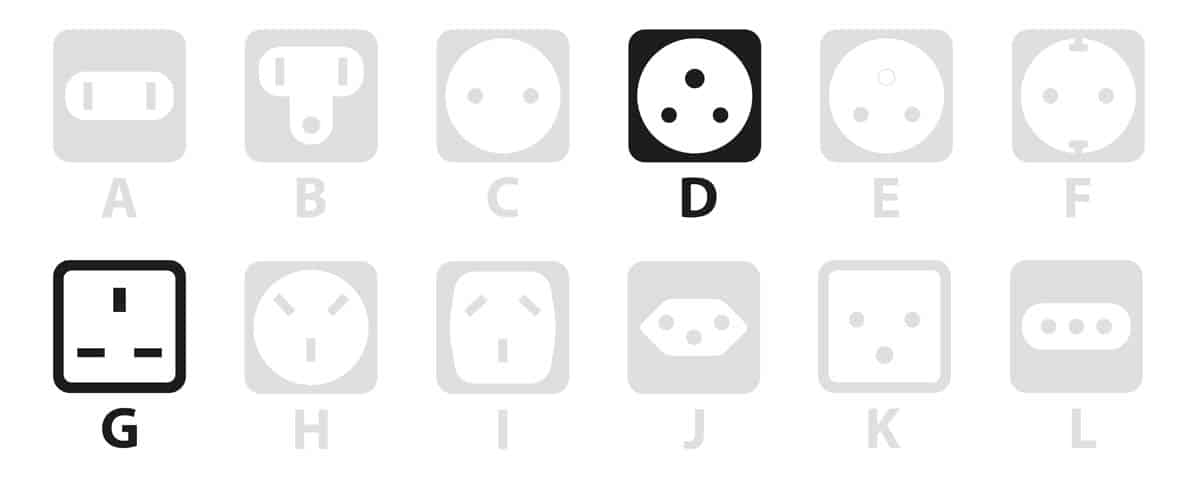
- Travel Adapter. Hong Kong has Types G and D electrical outlets. Some hotels have universal sockets that can accommodate most plugs, but best to bring a universal travel adapter.
TESSAN Universal Travel Adapter
Momax 1-World Universal 2-Port USB Travel Charger- Internet Connection. For maps, transportation, and quick internet searches. Get an eSIM from Airalo. Just visit www.thepoortraveler.net/eSIM, search for Hong Kong, and use our promo code THEPOORTRAVELER for 10-15% OFF.
For Filipino Travelers
- eTravel. Just go to etravel.gov.ph or use the eGov app. This functions as the Philippines’ unified Departure/Arrival Card, Health Declaration, and Customs form. On the Hong Kong side, you no longer need to accomplish an Arrival Card, digital or physical. It was abolished in 2024.
- Travel Tax. The standard travel tax is P1620 for economy/business class passengers and P2700 for first class.
- Return Flight Booking
- Accommodation Booking. You can find deals on Agoda! Use AGODATPT for 10% off, applicable on select hotels.
Top Hong Kong Attractions
✅ You can also visit our The Poor Traveler Masterlist. Here, we compiled travel essentials, including immigration requirements and all our recommended hotels and attractions. Just visit this page: TPT Masterlist. Then, scroll until you see the section about Hong Kong. We also have a compilation for other destinations around the world.
UNDERSTANDING HONG KONG
Hong Kong is one of the busiest and most developed metropolitan hubs in Asia in terms of trade, business, and tourism. Although officially a part of China, Hong Kong is worlds apart from the rest of the country culturally and politically because of its unique history. After the British won the Second Battle of Chuenpi, the Qing Empire, which ruled China at the time, admitted defeat. Peace negotiations resulted in the Treaty of Nanjing on 29 August 1842, which formally ceded Hong Kong to Britain and ended the First Opium War.
Since then, Hong Kong was a colony of the then-mighty British Empire, except during World War II, when it was occupied by Japan. Britain maintained its rule of the territory until 1997, when it was handed back to China.
Today, Hong Kong is a Special Administrative Region of China. But it has its own economy, currency, and immigration laws. Hence, even mainland Chinese would need to go through Immigration checks upon entering the region.
Other info you need to know:
- Language: Cantonese and English are the official languages. Almost 95% of the population speaks Cantonese. Almost everything a tourist would need has an English translation, so there isn’t that thick of a language barrier. Mandarin is also starting to flourish as more immigrants from the mainland pour in.
- Currency: Hong Kong dollar (HKD, HK$). HKD 100 is around PHP 764, USD 12.85, EUR 11, SGD 16.5 (as of January 2026).
- Timezone: GMT+8 (HKT – Hong Kong Time), year round. No daylight saving time observed. Same time zone as the Philippines, Beijing, Singapore, and Malaysia. One hour behind Japan.
- Electricity Info: 220V, 50Hz. Type G is the most common. Some hotels have universal sockets that can accommodate most plugs, but best to bring a power adapter.
WHERE TO STAY IN HONG KONG
Hong Kong is small, but divided into three main regions: Hong Kong Island, the Kowloon Peninsula, and the New Territories, which also encompasses 200 outlying islands. While these areas are connected by sprawling train and bus networks, it is important to be familiar with the geography.
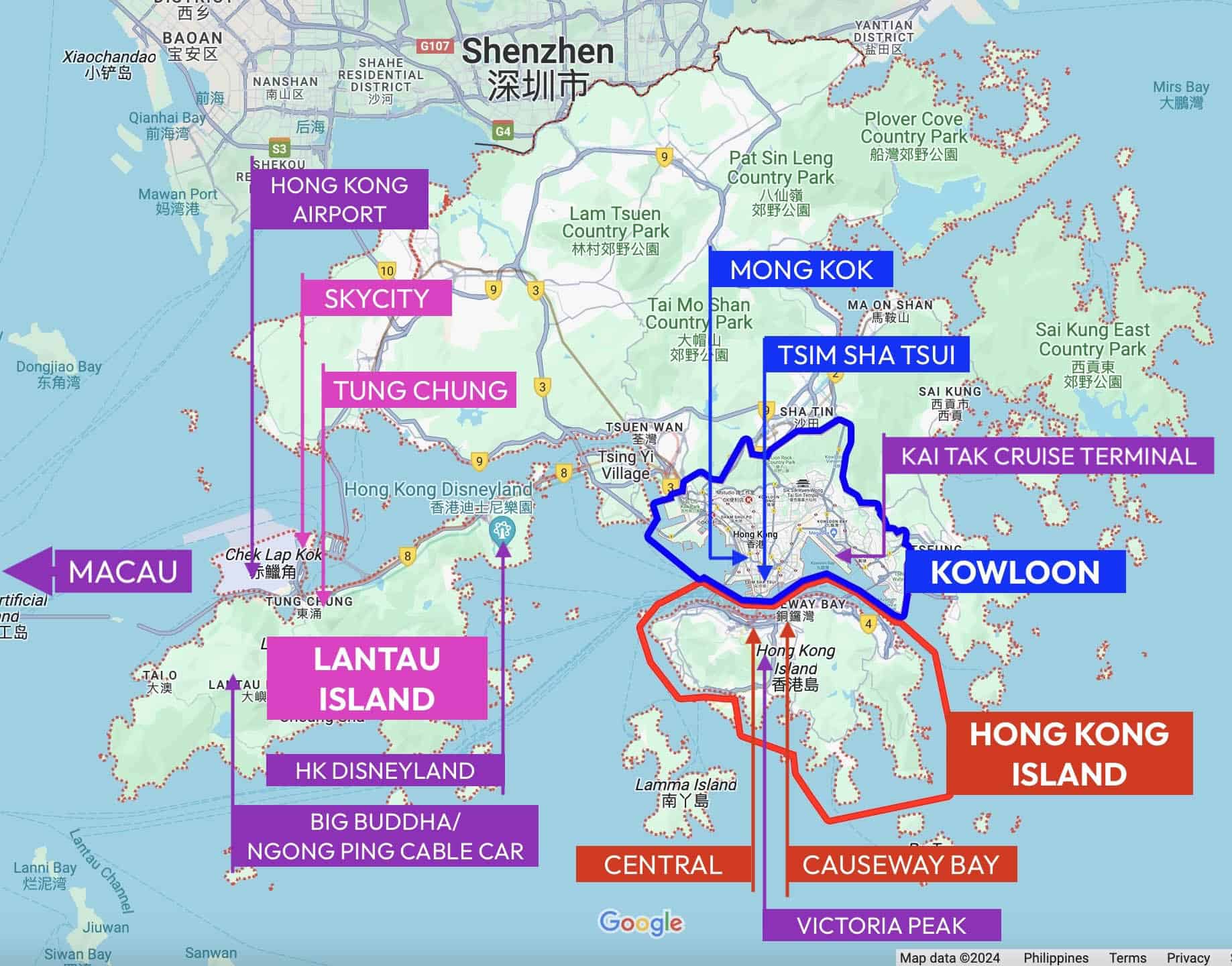
Separated by Victoria Harbour, the southern coast of Kowloon and the northern coast of Hong Kong Island are considered the two sides of the city center. Both are bustling, but they have very different characters. On the Kowloon Side, you’ll find more traditional districts like Tsim Sha Tsui, Jordan, and Mong Kok. The Hong Kong side is more modern and fosters a more British colonial atmosphere. It’s here that you’ll find Central, Sheung Wan, Admiralty, Wan Chai, and Causeway Bay.
If most of the attractions you want to visit are in the city center, then any of these districts are a great choice. The Peak Tram Station, which will take you to Victoria Peak, is here, as well as Avenue of Stars, M+ Museum, and Mong Kok. So yes, these areas are ideal. Just make sure you are within walking distance of an MTR Station or even a bus stop, and you should be fine.
You’ll find a lot of affordable hotels, hostels and guesthouses in these areas. And by affordable, I mean by Hong Kong standards.
TIP! When you book on Agoda, you can score as much as P5800 OFF if you redeem our discount coupon. Just visit www.thepoortraveler.net/agoda. You can also use our Agoda Promo Code AGODATPT. On the Agoda app, you must first redeem it on the COUPONS tab by entering AGODATPT, then start selecting your hotel and room. Then, upon checkout, enter AGODATPT again in the right field. It will give you 10% OFF, capped at USD 100.
Hong Kong Island
If you wish to stay close to the Central area, the hotel we tried is iClub Sheung Wan, which is located near the MTR Sheung Wan Station and several bus stops, and is surrounded by attractions and good food spots. It’s also squeaky clean and has a working desk.
✅ CHECK RATES & AVAILABILITY HERE!
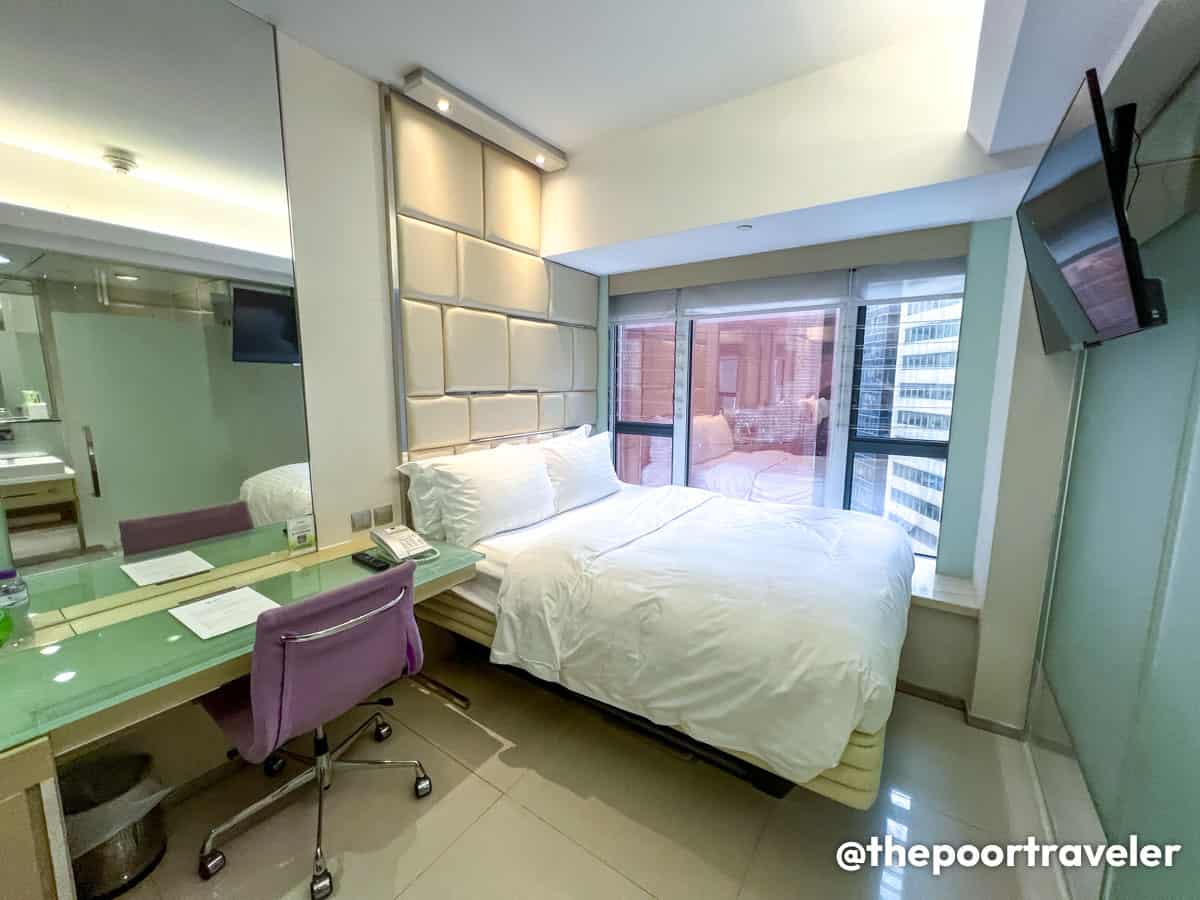
Top Hotels in Central & Sheung Wan
🔥🔥🔥 Use AGODATPT for 10% off on select hotels! 🔥🔥🔥
- Ibis Hong Kong Central & Sheung Wan Hotel. Check Rates & Availability! ✅
- Homy Central. Check Rates & Availability! ✅
- iClub Sheung Wan. Check Rates & Availability! ✅
- Mandarin Oriental Hong Kong. Check Rates & Availability! ✅
- Four Seasons Hotel Hong Kong. Check Rates & Availability! ✅
Search for more Central Hotels!
Kowloon
Over in Kowloon, our last stay was in iClub Mong Kok, which is very similar to its Sheung Wan counterpart. If you want to be closer to the night markets, Mong Kok is the place to be.
✅ CHECK RATES & AVAILABILITY HERE!
But the majority of budget accommodations listed online are located in these two buildings in Tsim Sha Tsui: Chung King Mansion and Mirador Mansion.
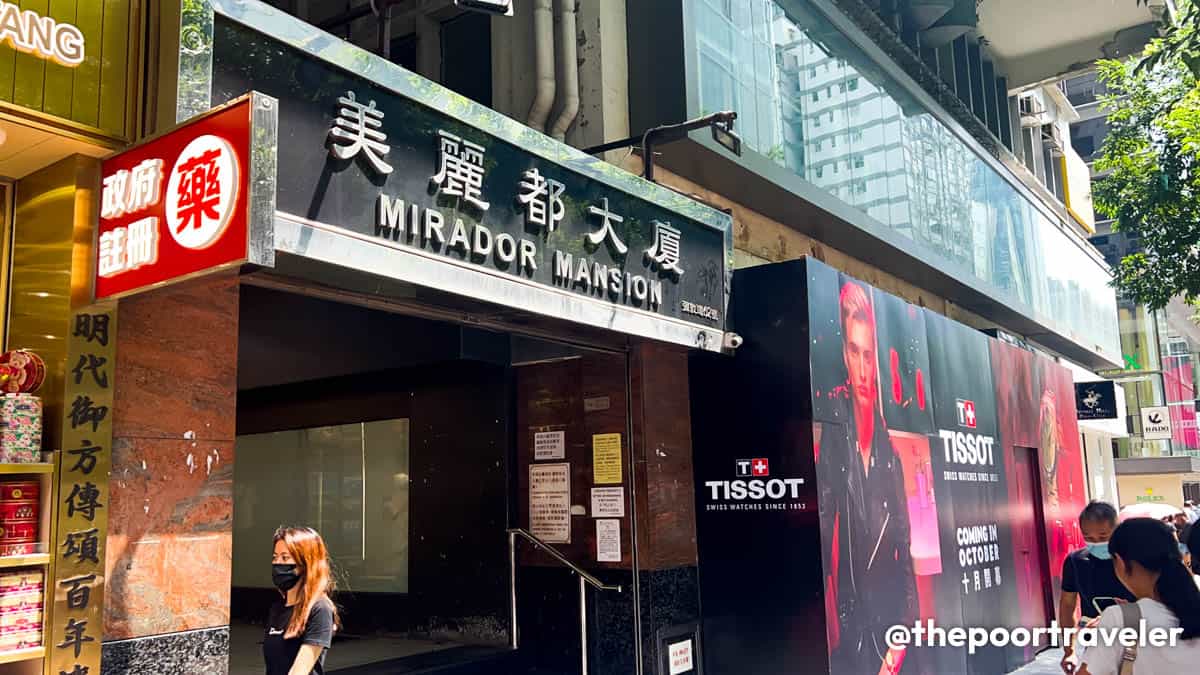
These are residential buildings whose units are converted into cramped guesthouses. These are very polarizing online. True, the ground floors can be overwhelmingly crowded and frantic, but it can be quiet inside these units. It’s a hit or miss. Many of these units can be too small and have bad reviews. But it’s not impossible to find well-maintained options. My last time here, I stayed at Victoria Inn. It was alright. Small but well-maintained.
✅ CHECK RATES & AVAILABILITY HERE!
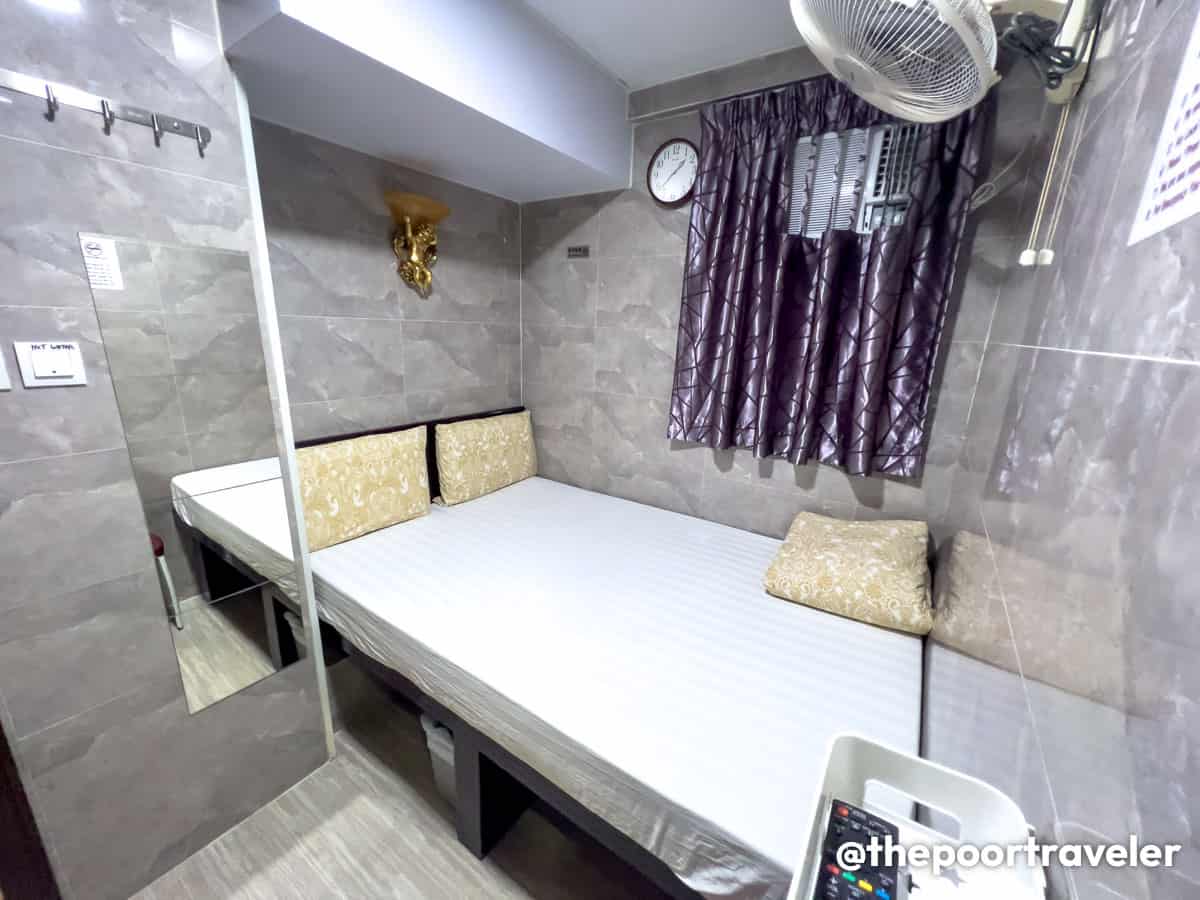
Top Hotels in Tsim Sha Tsui & Mong Kok
🔥🔥🔥 Use AGODATPT for 10% off on select hotels! 🔥🔥🔥
- B P International, Tsim Sha Tsui Check Rates & Availability! ✅
- Stanford Hillview Hotel, Tsim Sha Tsui Check Rates & Availability! ✅
- Kimberley Hotel, Tsim Sha Tsui Check Rates & Availability! ✅
- Metropark Hotel Mongkok. Check Rates & Availability! ✅
- MK Stay, Mong Kok Check Rates & Availability! ✅
- iClub Mong Kok. Check Rates & Availability! ✅
Search for more Tsim Sha Tsui Hotels and Mong Kok Hotels!
New Territories
But the airport and other popular attractions are located on Lantau Island, which although accessible, is objectively far from the city center. You’ll find the Hong Kong International Airport, Hong Kong Disneyland, Ngong Ping 360 Cable Car station, and the Big Buddha here. If you also want to go on a day trip to Macau, the HZMB port is here.
If your itinerary is primarily dominated by these attractions, consider staying in Tung Chung or the Hong Kong SkyCity, just beside the airport.
In Tung Chung, we tried Four Points by Sheraton. This is a full-service hotel, offering spacious rooms. There are plenty of hotels in the area and the hotel is close to the MTR Tung Chung Station.
✅ CHECK RATES & AVAILABILITY HERE!
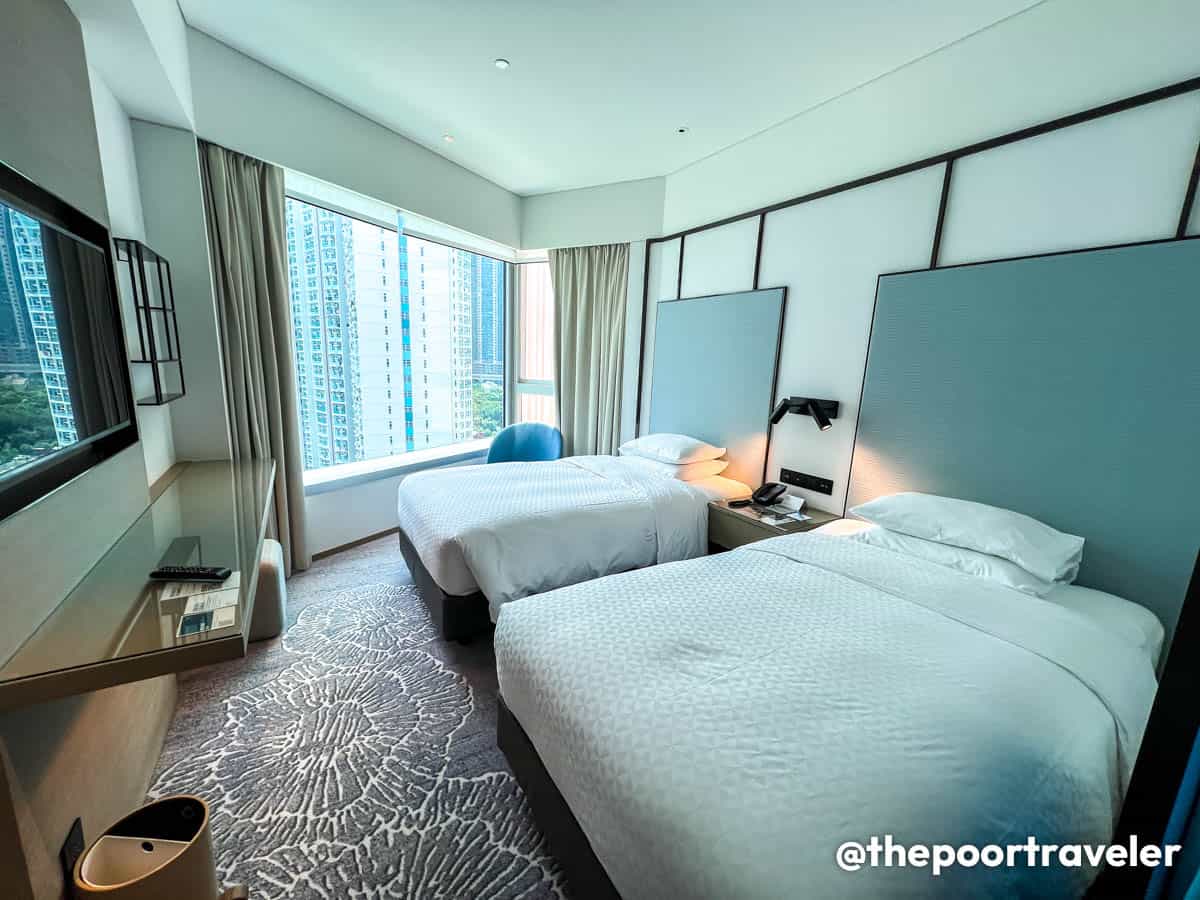
In SkyCity, we stayed at Hong Kong SkyCity Marriott Hotel, which is OK for families because each room here is good for four (4) pax.
✅ CHECK RATES & AVAILABILITY HERE!
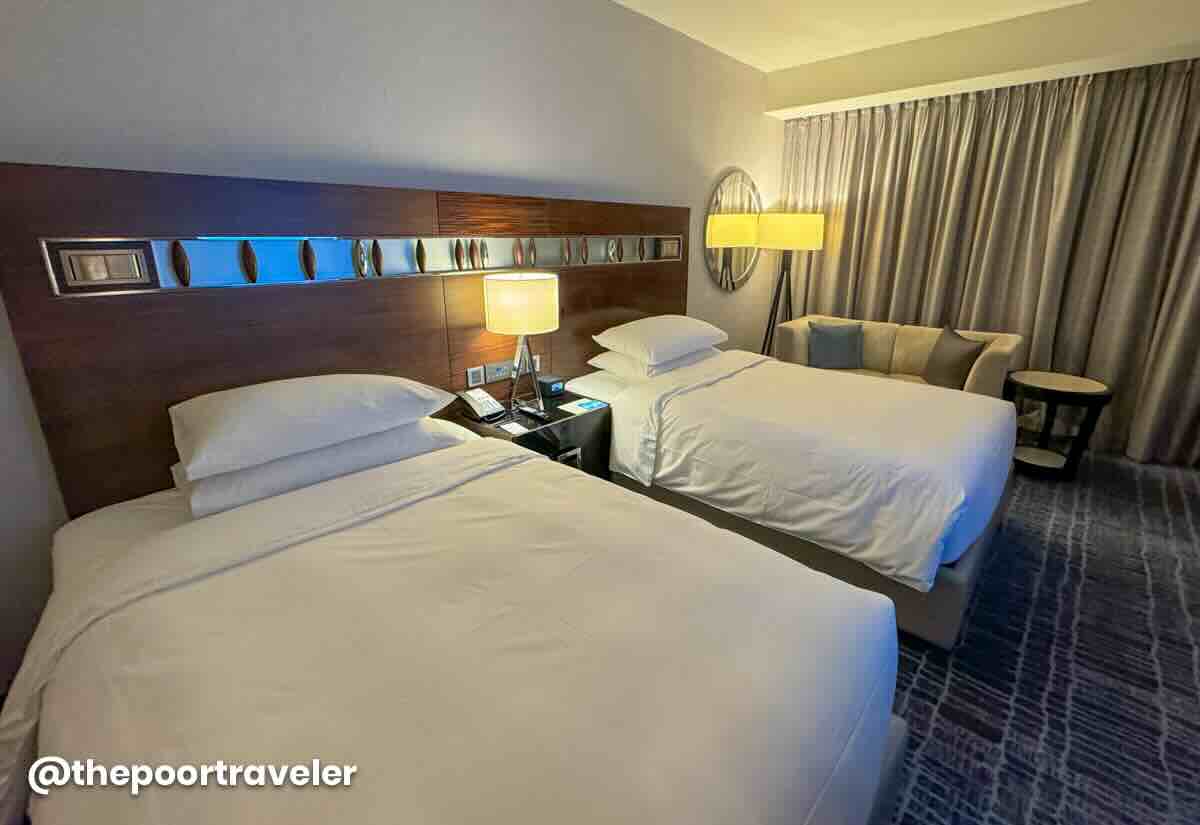
Both hotels have large and clean rooms, and when it comes to the price, they are also more affordable compared to their counterparts in the city center. Also, the rates are not that far off from mid-range hotels in Central or Kowloon. Moreover, both provide FREE shuttle service to MTR Tung Chung Station and the airport.
Top Hotels in Tung Chung & Hong Kong SkyCity
🔥🔥🔥 Use AGODATPT for 10% off on select hotels! 🔥🔥🔥
- Novotel Citygate Hong Kong Hotel, Tung Chung Check Rates & Availability! ✅
- Four Points by Sheraton Hong Kong Tung Chung. Check Rates & Availability! ✅
- The Silveri Hong Kong – MGallery, Tung Chung Check Rates & Availability! ✅
- Regal Airport Hotel, SkyCity Check Rates & Availability! ✅
- Hong Kong SkyCity Marriott Hotel. Check Rates & Availability! ✅
Search for more Hotels Near Hong Kong Airport!
The best area to stay depends on your itinerary, but you can check out our WHERE TO STAY IN HONG KONG article for a more in-depth explanation.

HOW TO GET TO HONG KONG
Hong Kong International Airport (HKG) is consistently ranked among the world’s best airports, giving visitors a first glimpse of how efficient Hong Kong can be.
Manila to Hong Kong
Local carriers like Cebu Pacific, Philippines AirAsia, and Philippine Airlines all fly directly from Manila to Hong Kong, so you have plenty of options. But you should also check out Cathay Pacific and HK Express, which also offer competitive rates.
If you’re on a budget, you can wait for a seat sale, especially Piso sale, to snag cheap flights. You can score roundtrip tickets for less than P6000, including all the taxes, fees, and carry-on bag, but without the check-in baggage allowance.
But when there is no ongoing sale, I think HK Express offers the lowest regular fares, mainly because these are red-eye flights, scheduled late at night or early morning.
If, for some reason, you can’t find reasonably-priced flights to Hong Kong on your target dates, you can also check out flights to Macau and just transfer by bus or ferry from there.
If you plan on visiting both cities, book a flight to Hong Kong and then take a return flight from Macau, or vice versa. This way, you get to see and discover both cities. I’ve done that before.
Hong Kong Airport Arrival Process
- After landing in Hong Kong and deplaning, follow the signs to the Immigration area. Hong Kong Airport is huge. Depending on the airline and the gate used, you might need to ride the monorail to get to it.
- At the Immigration Area, find the line for foreign visitors and wait for your turn. Once through, your passport won’t be stamped, but you’ll be given a small piece of paper indicating your travel document number and until when you’re allowed to stay in Hong Kong.
- Then, pick up your bag from the assigned carousel and exit the Customs area. On your way out, you’ll be passing by the Hong Kong Tourism Board’s booth. Drop by. They have maps, brochures, and sometimes, they have promos and raffles.
When you emerge into the Arrival Hall, you’ll be greeted by a long lane of currency exchange and internet service counters. Use this time to pick up the SIM or Octopus card that you ordered online.
When you have the Octopus Card, you don’t need to buy a ticket each time you travel. Just hover the card above the reader by the entrance, and you’re good to go. Although there are app versions and some stations and buses now accept direct credit card transactions, I still prefer using an Octopus Card.
Fares are also slightly lower with an Octopus Card. Although the discount per ride isn’t much, it can mean big savings when they rack up. The standard Octopus Card costs HK$ 150 for adults and HK$ 50 for kids, plus HK$ 50 deposit. The deposit for both standard and children’s cards is refundable when you surrender the card.
If you don’t think you’d be able to return the card (thereby letting go of your deposit), you can buy an Octopus TOURIST Card instead. Klook has discounted combo options, too. You can buy one here:
If you already have an Octopus card and you just want to reload or top up, you can do that at a 7-Eleven store.
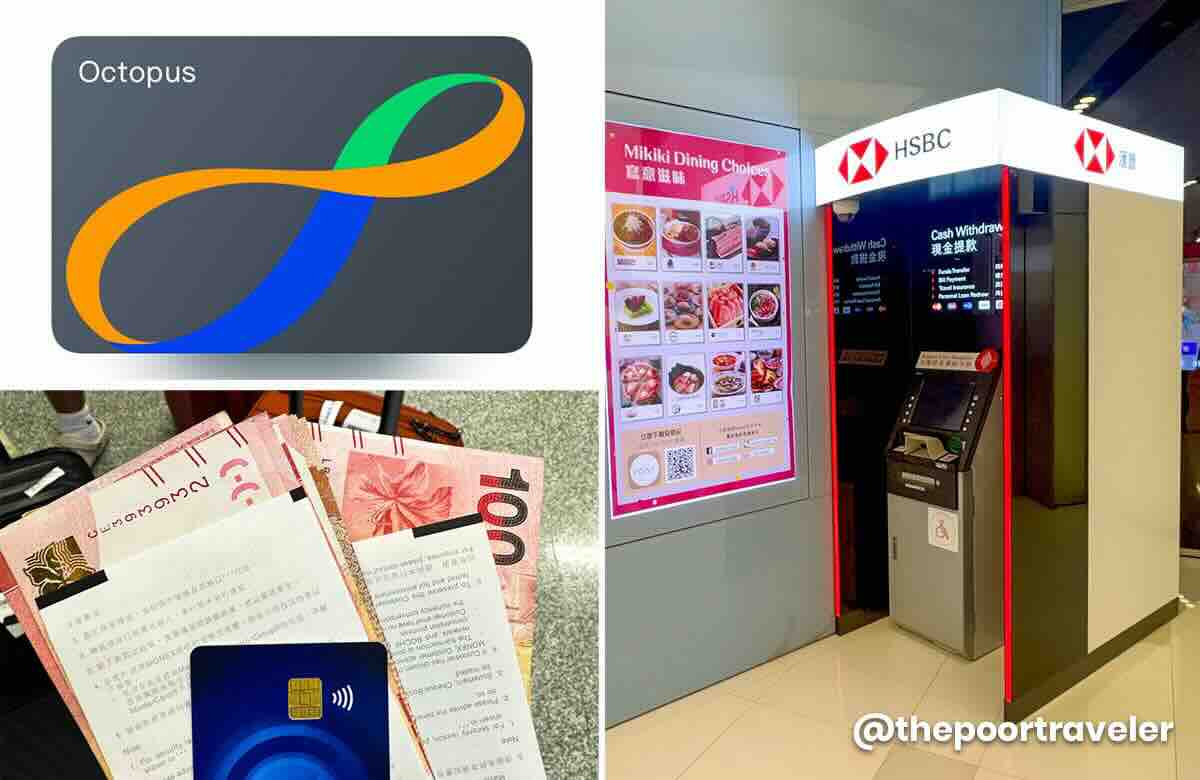
If you need to withdraw cash, there are ATMs available on site, too.
But perhaps you’ll also notice the Airport Express Station, which is directly accessible from the Arrival Hall.
Hong Kong Airport is built on reclaimed land on Lantau Island, west of Hong Kong’s main urban areas. And as I pointed out earlier, it’s quite far from the city center. So the next question you might be thinking is: how do you get from the airport to your hotel?
HONG KONG AIRPORT TO YOUR HOTEL or CITY CENTER
First of all, if you’re staying at a big hotel, check first if they offer FREE airport transfers. Some hotels do, especially those in Tung Chung and SkyCity areas. I know for a fact that Marriott SkyCity and Four Points by Sheraton Tung Chung have this complimentary shuttle service because we’ve tried them before. But check the schedule. If your flight is arriving past midnight, you might not be able to avail of it.
The good news is, you have plenty of public transportation options, but the two main ones are the Airport Express train and the bus.
We have separate articles detailing how to get from the airport to Tsim Sha Tsui, Mong Kok, and Central areas, so if you want more details, go check them out. But here’s a brief rundown. I’ll only be discussing here the easiest or most convenient option.
By Airport Express
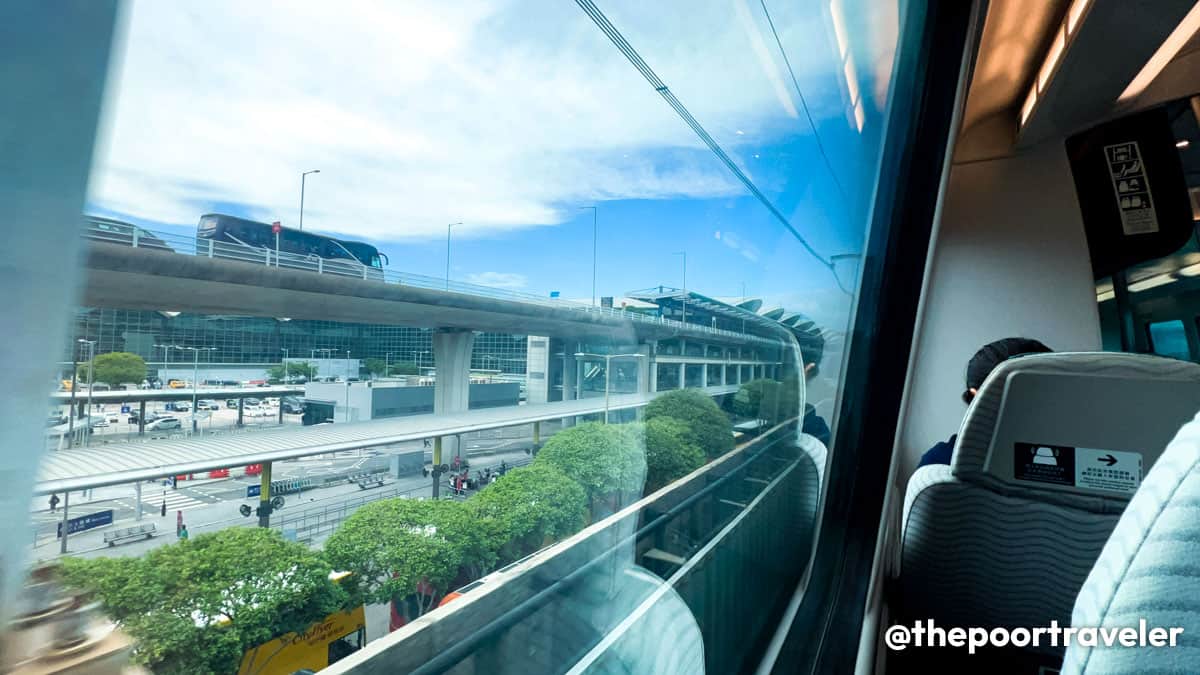
Technically, the Airport Express is the fastest option. There are only three stops:
- Tsing Yi Station
- Kowloon Station
- Hong Kong Station
If your hotel or destination is close to any of these stations, then good. Take the Airport Express. It’s fast, it’s easy, it’s convenient.
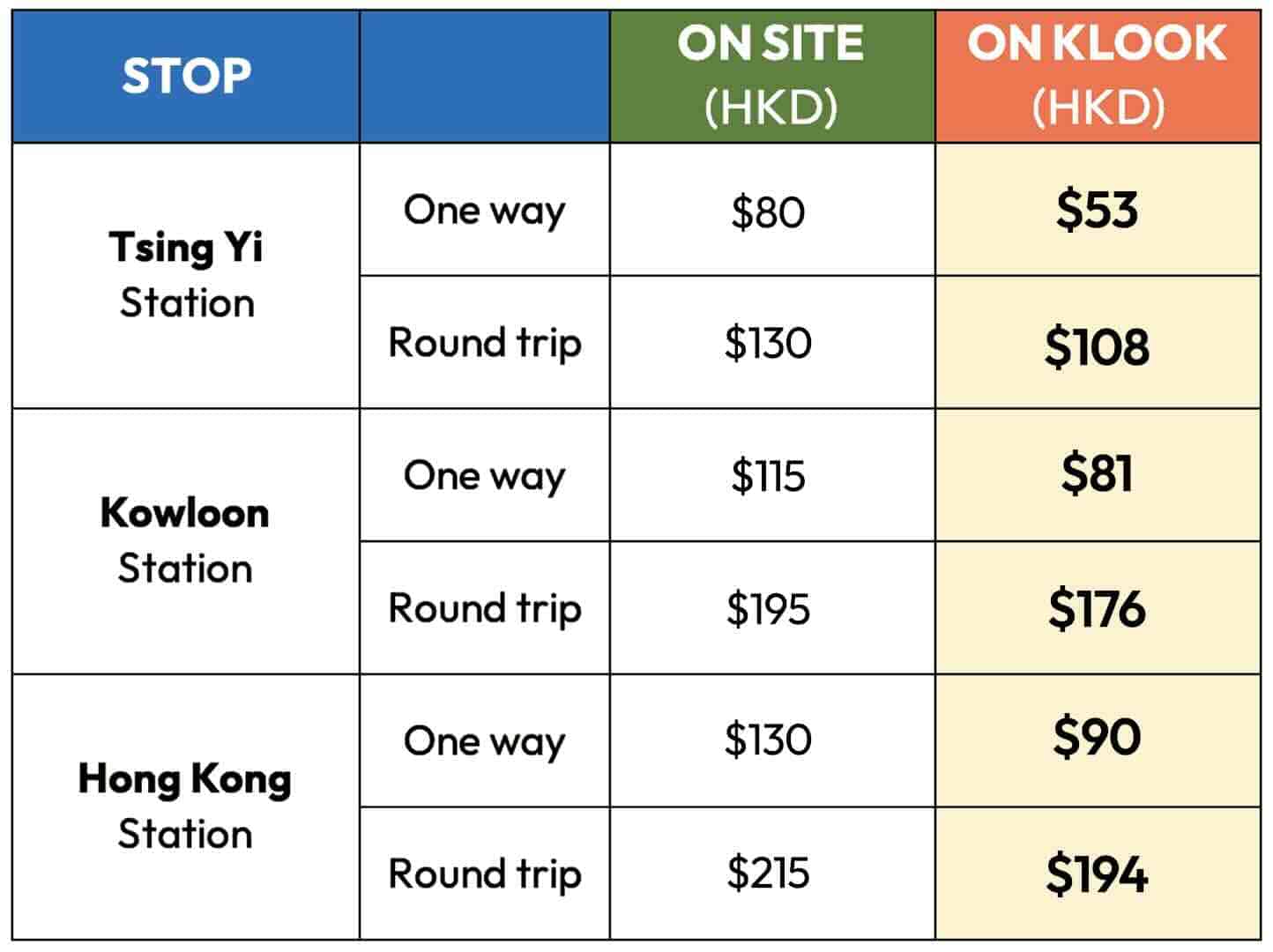
Airport Express tickets are cheaper on Klook!
The Airport Express is connected to the MTR, too. If your hotel is close to the MTR Station, you can transfer at either Tsing Yi Station or Hong Kong Station. But note that from Hong Kong Station to Central Station, it’s quite a long walk. It’s underground for the most part, so you don’t need to worry about the rain or crossing the road, but it’s a long connection.
If you don’t want to transfer, especially if you have heavy luggage in tow, check if your hotel is close to a bus stop.
By Bus
Hong Kong Airport to Mong Kok, Yau Ma Tei or Tsim Sha Tsui
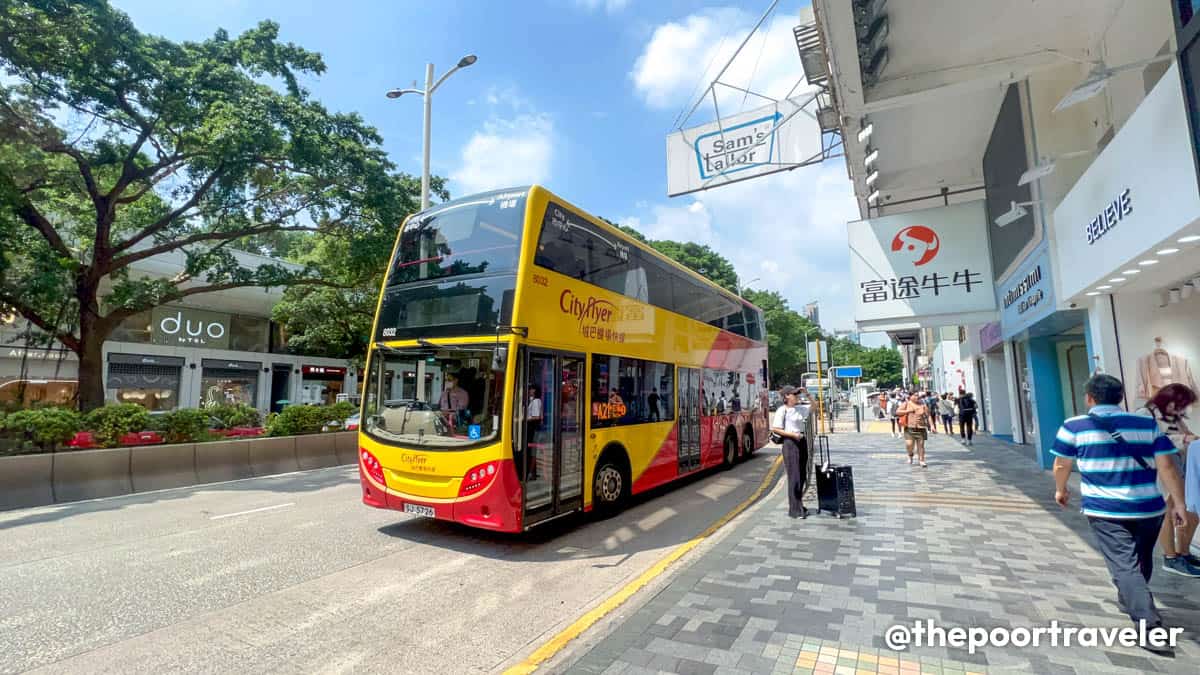
If your hotel is in Tsim Sha Tsui and close to either Nathan Road or Chatham Road, the best way to get there is the bus — in particular, Bus A21. Not only is this the cheapest, it is also the easiest and most convenient option.
Why? Because unlike the other options, this is a direct way and does not entail switching or transferring along the way. If you take the Airport Express, you’ll be switching to MTR either in Tsing Yi or in Hong Kong Station. So, bus it is. Here’s how:
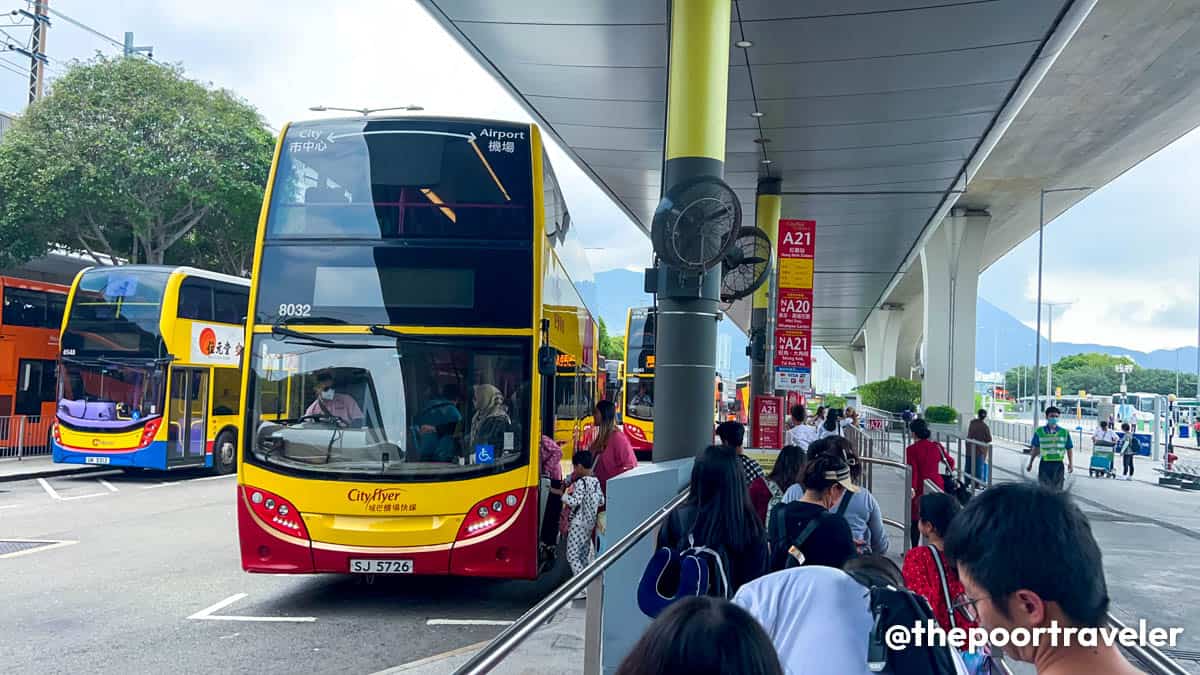
- Follow the BUS signs to the Airport Ground Transportation Centre. It is right in front of the airport building.
- Find the A21 Bus Stop. Airport buses are double-deckers. They also display the route or bus number in front, so make sure you’re boarding the right bus.
- Pay as you board. Tap or hover your Octopus Card above the card reader, installed just by the entrance door of the bus. If you decide not to get an Octopus card, you can pay by cash but make sure you have the exact amount because they don’t give change. The fare is HK$ 34.60.
- Alight at the stop closest to your hotel. Travel time is 60 to 90 minutes, depending on where you are alighting and the traffic situation at the time.
A21 Bus Stops
If you’re bound for Mong Kok, Yau Ma Tei, or Tsim Sha Tsui, check which of these stops is closest to your hotel.
AROUND MONG KOK
- Metropark Hotel Mongkok; Lai Chi Kok Road
- Argyle Centre; Nathan Road
- Bank Centre; Nathan Road
- Sino Centre; Nathan Road
AROUND YAU MA TEI
- Man Ming Lane; Nathan Road
- Nathan Hotel; Nathan Road
- Prudential Centre; Nathan Road
AROUND TSIM SHA TSUI
- Prudential Centre; Nathan Road
- Kimberley Road; Nathan Road
- Cameron Road; Nathan Road
- Middle Road; Nathan Road
- East Tsim Sha Tsui Station; Salisbury Road
- Mody Road; Chatham Road South
- Granville Road; Chatham Road South
- Hong Kong Science Museum; Chatham Road
You may simply walk to your hotel or inn if it’s located close to Chatham Road or Nathan Road. If you’ll be staying at an inn or guesthouse at Chungking Mansions or Mirador Mansion, your stop is Middle Road (Nathan Road).
REMEMBER! The A21 bus is available from 5:30 AM to midnight. If your flight is arriving after midnight, take the N21 bus instead, which runs from 12:20 AM until 4:40 AM. It also makes several stops in Tsim Sha Tsui. Fare is HK$ 23.80.
Hong Kong Airport to Central
The bus is also the cheapest way to get to Central. Find out the closest bus stop to your hotel. But it’s very likely that the bus for you is Bus A11.
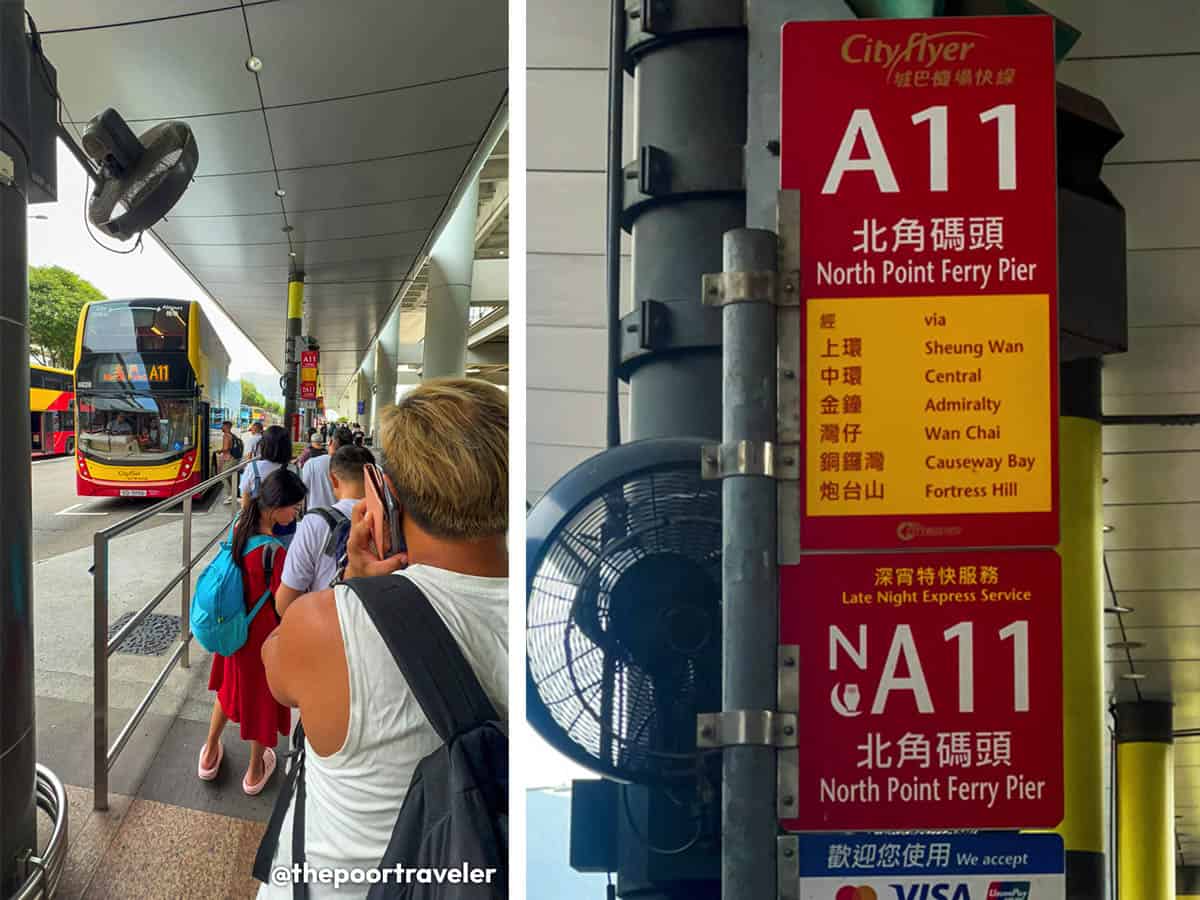
- At the Airport Ground Transportation Centre, look for the A11 bus stop. A11 buses are also double-deckers.
- Pay as you board. You can use your Octopus Card to pay too. And again, if cash, no change. The fare is 41.90 HKD, regardless of which area in Central you’ll get off at. The fare remains the same.
- Get off at your stop. Travel time is 50 to 70 minutes, depending on where you are alighting and the traffic situation at the time.
On one of our trips, we booked a room at iClub Sheung Wan, close to the MTR Sheung Wan Station and the bus stop. We got off at Macau Ferry, Connaught Road Bus Stop, then used the elevator and overpass to cross the main road, and continued our short walk to our hotel.
The A11 bus is available from 5:35 AM to 12:30 around midnight.
REMINDER! If your flight is scheduled to arrive in Hong Kong in the wee hours, take the N11 Bus instead, which operates from 1:50 AM until 4:50 AM. Fare is HK$ 23.80.
HOW TO GET AROUND HONG KONG
Google Maps is very reliable in Hong Kong. Aside from the MTR, it will also suggest bus and mini-bus options. Here are your options on getting around. Octopus Cards work on all of these transportation modes.
Transportation Options
By MTR
Hong Kong’s MTR system is your best friend in the city. It’s extensive, tourist-friendly, and relatively inexpensive. However, this intricate network can be confusing for first-timers.
You can use Google Maps. It will tell you recommended routes, including the fastest and easiest options, and even the fare.
If you have an Octopus Card, you just need to hover the card above the sensor at the gates and enter. Otherwise, you will need to purchase single-journey tickets.
Here’s how to get one.
HOW TO USE THE HONG KONG MTR
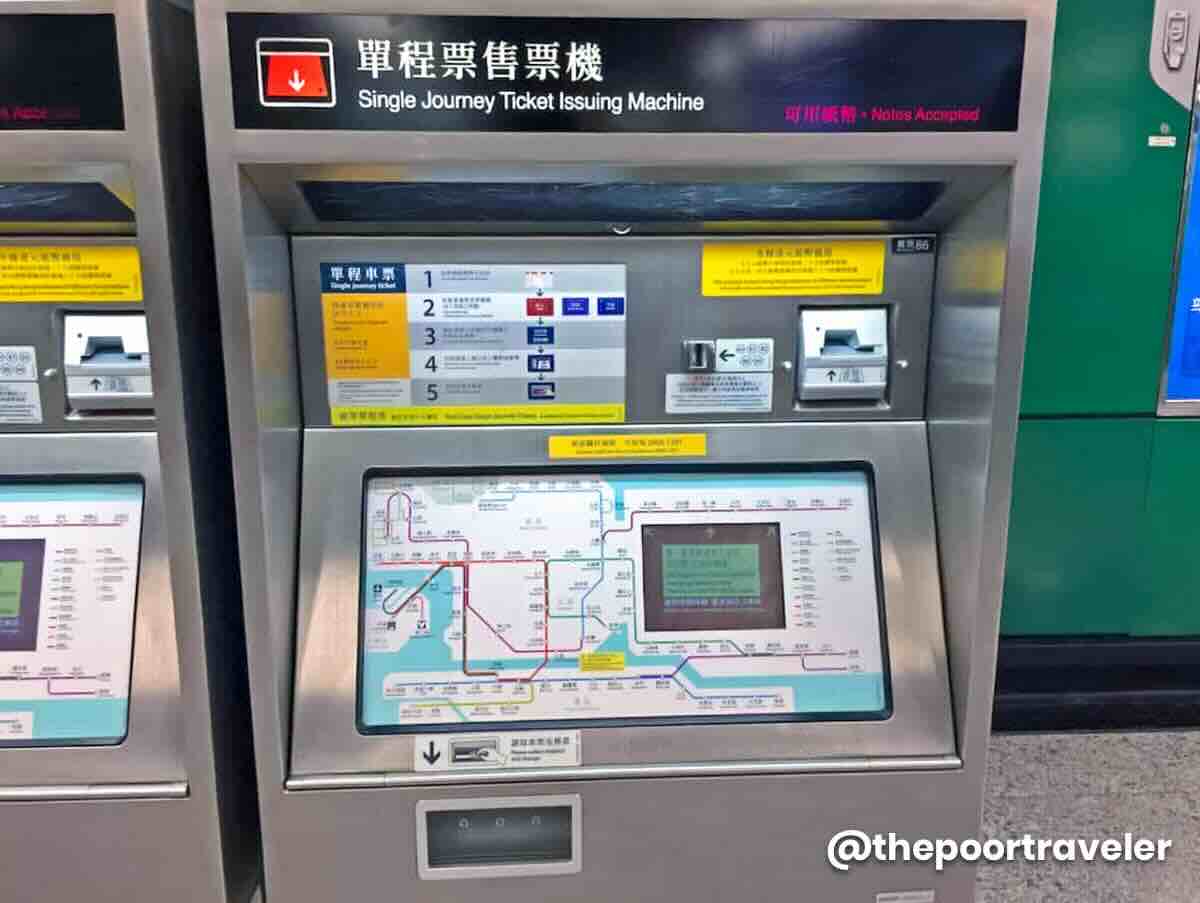
- At the train station, approach one of the ticket machines. Each machine has a screen and a route map.
- Touch the destination on the route map.
- Select ticket type. By default, it is set to ADULT.
- Insert coins or bills.
- Get the ticket and change.
But again, you can make your life easier by getting an Octopus Card.
✅ RESERVE AN OCTOPUS CARD HERE!
By Tram (Central)
These iconic double-decker trams are one of the cheapest and most fascinating ways to get around the Central areas. Running from Kennedy Town to Shau Kei Wan, it only has six main routes.
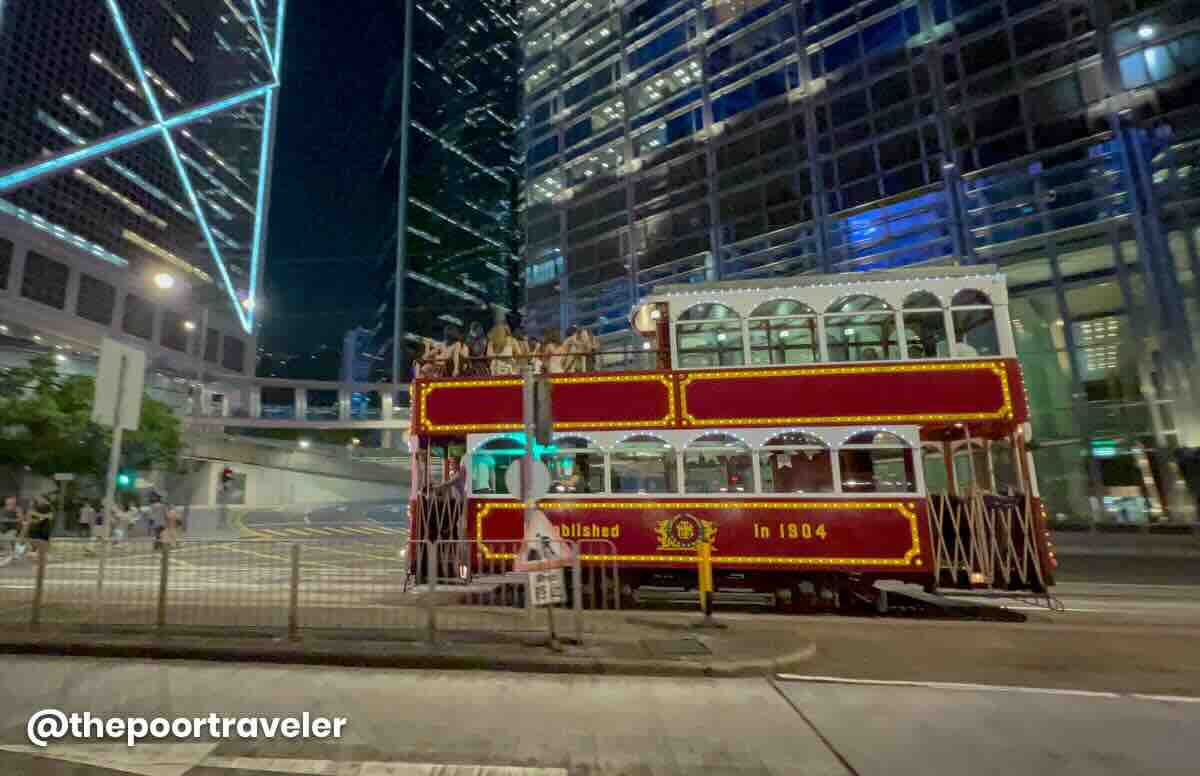
These trams are perfect for slow sightseeing, especially if you snag a seat on the upper deck. At just a flat fare of HK$ 3.30 per ride, it’s basically a moving observation deck through neighborhoods like Central, Wan Chai, and Causeway Bay.
That said, trams are not the fastest option. They stop often and share the road with traffic, so they’re best used when you’re not in a rush.
By Bus
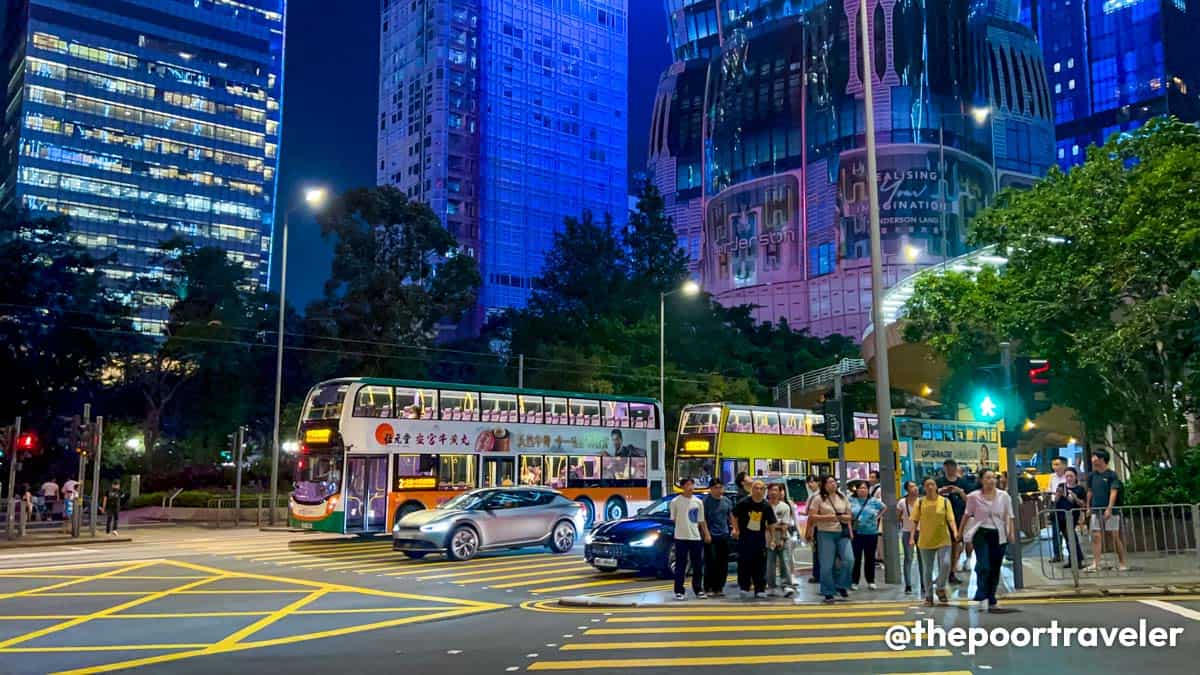
Hong Kong’s bus system is efficient, and surprisingly easy to use — even for visitors. Buses reach areas that trains don’t, including residential neighborhoods, beaches, and hiking spots. The only downside? Traffic.
During rush hour, buses can slow to a crawl. Still, if you’re heading somewhere specific or scenic — and you’re not pressed for time — buses are a solid, affordable choice. Most accept Octopus cards, and stops are clearly announced in English.
By Mini-Bus
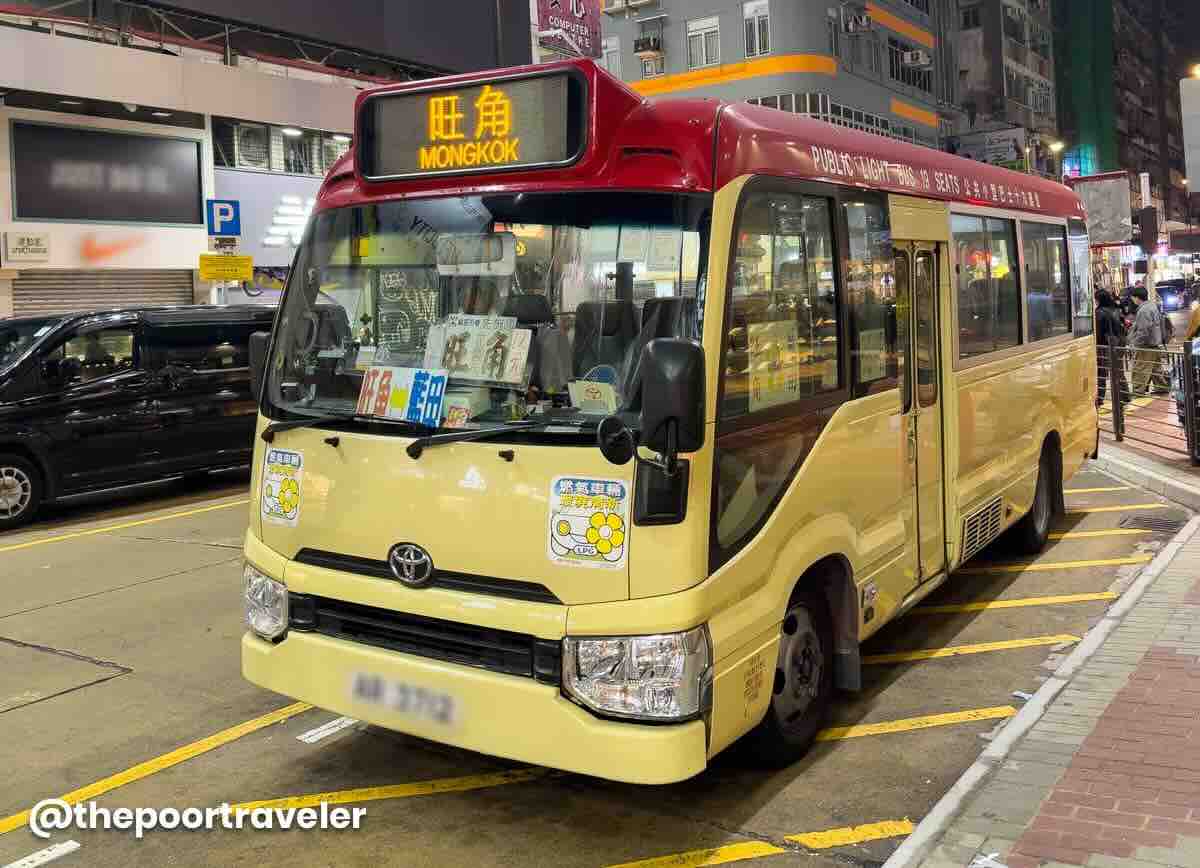
Minibuses are small, fast, and very local — perfect for routes that big buses or trains don’t cover. They’re especially common in residential areas and hilly neighborhoods, and short point-to-point routes. There are two types: green minibuses, which run on fixed routes with set stops, and red minibuses, which are more flexible but less tourist-friendly. Green minibuses accept Octopus cards.
Minibuses are fast but can feel intense. Drivers don’t mess around, and because there are fewer seats, they fill up quickly.
By Ferry
Ferries are one of the most enjoyable ways to get around Hong Kong. The Star Ferry, connecting Hong Kong Island and Kowloon, is short, cheap, and legendary, offering unbeatable skyline views for the price of loose change. It’s not just transport; it’s a must-do experience, especially at sunset.
If the Star Ferry is too short and restricting for you, try the Hong Kong Water Taxi instead. It is a modern, scenic way to move around Victoria Harbour. It operates along the harbourfront, connecting key areas such as Central, Wan Chai, Tsim Sha Tsui East (near Avenue of Stars), and West Kowloon (near M+ Museum), making it useful for both sightseeing and short point-to-point trips. Think of it as transport and an experience rolled into one.

There are two types of ferries: regular and premium. Minimum fare is HKD 30 for regular and HKD 50 for premium ferry. But if you want to do a roundtrip ride so you feel like you’re on a relaxing cruise, it can cost you as much as HKD 100 for regular and HKD 150 for premium. But that’s still much cheaper than the leisure harbour cruises like Wing On or Aqua Luna.
If you want to visit outlying islands like Peng Chau and Cheung Chau, which offer their own set of attractions, you can also catch public passenger ferries at Central Pier No. 5.
WHERE TO EAT IN HONG KONG
Hong Kong is one of those cities where eating well is basically unavoidable. From legendary noodle shops to no-frills dumpling joints and reliable Michelin-approved chains, great food is everywhere! You just need to know where to start.
Central & Sheung Wan
Central is packed with some of Hong Kong’s most reputable eateries, especially if you’re craving classic local flavors. Tsim Chai Kee is famous for its rich, no-nonsense noodle bowls, served fast and without ceremony—the way locals like it. It’s not too hard to spot because their Wellington branch always has a long line.
Just a short walk away, Luk On Kui (formerly Lin Heung Kui) continues the old-school Cantonese gastronomic tradition, with nostalgic vibes and comforting dimsum and roasted staples that feel straight out of a different era.
For something a bit more visitor-friendly but still very legit, Dim Sum Square Kitchen offers approachable, well-executed dim sum that’s easy to order and easy to love.
Jordan Area
If you’re staying around Jordan (close to Jordan Station) or shopping at Temple Street Night Market, drop by some of the local comfort-food favorites in the area.
Yuan Ji Dumpling is all about flavorful dumplings done right—perfect for a quick, satisfying meal. You can have them with chili oil, peanut butter, or soup.
Nearby, Mak Man Kee is a must for wonton noodle soup lovers, known for its delicate dumplings, springy noodles, and deeply flavorful broth. But they have other noodle options, too.
It’s one of those places that locals swear by, and for good reason.
Chains Worth Trying
Hong Kong has amazing independent eateries, but some chains are popular for a reason. Tim Ho Wan has branches in Olympic City and MTR Hong Kong Station among others. It is famous for its baked BBQ pork buns and consistently good dim sum. It’s an easy, reliable choice whether you’re short on time or just want something you know will deliver.
We have a separate article where we go in-depth about our experiences at these restaurants — what we ordered, what stood out, and whether they’re worth the hype, read here for the full foodie breakdown: WHERE TO EAT IN HONG KONG
THINGS TO DO IN HONG KONG
We will be creating a separate article about this, so we won’t go into detail. But here’s a quick rundown of the best things to do in Hong Kong.
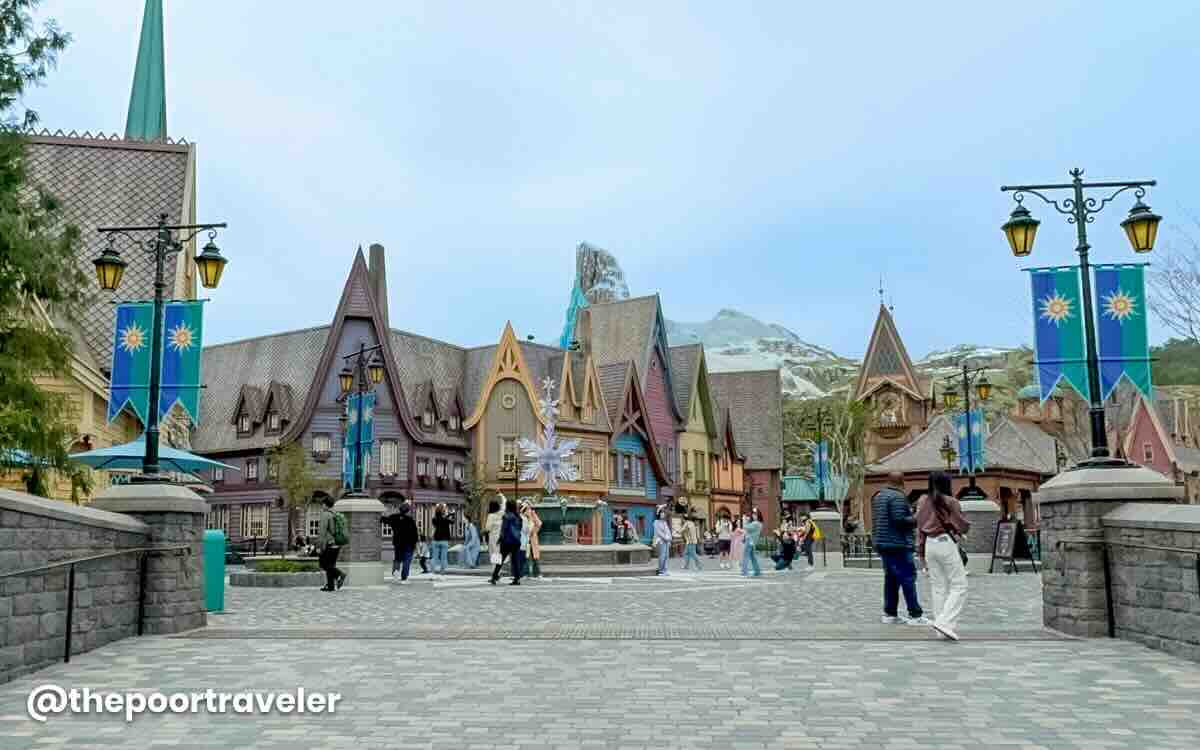
- Hong Kong Disneyland. It is the smallest Disney Resort in the world, but it’s packed with attractions. You can cover most major rides in a day, making it a solid choice even if you’re not traveling with kids. We have lots of articles with useful tips including the best rides and sample Disneyland itinerary. Just search this blog. Get Your Ticket Here! ✅

- Ngong Ping. The Ngong Ping 360 cable car ride gives you a rare look at Hong Kong’s green, mountainous side, far from the city’s skyline. Once up top, the village is touristy but manageable. Climb the towering staircase for a closer look at the Big Buddha and visit the monastery area for a genuinely calmer atmosphere. Get Your Cable Car Ticket Here! ✅

- Tai O Village. Just a bus ride away from Ngong Ping Village, Tai O feels more lived-in than curated, which is part of its appeal. Stilt houses, narrow alleys, and small seafood shops give it a distinct character compared to the rest of Hong Kong. You can hop on a boat tour or go on a food trip around the area!

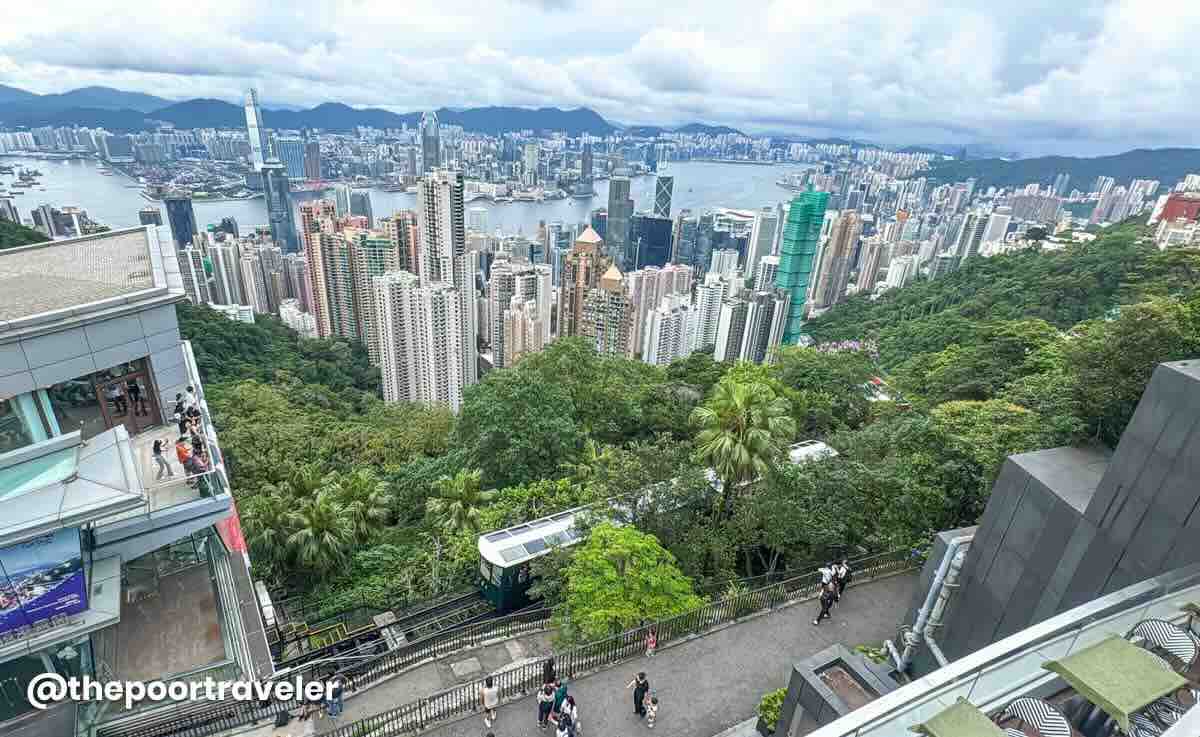
- Victoria Peak. The Peak is popular for a reason. It really does offer the best view of the city’s skyline, in my opinion. If you’re on a budget, you can take the mini-bus or even trek to the peak, but most tourists prefer the fashionable Peak Tram, which will give you a surreal, askew look at the city. At the top, the Sky Terrace 428 offers a fantastic vantage point, but if you don’t want to pay anything, just go to the top of the Peak Galleria Mall. Get Your Peak Tram Ticket Here! ✅

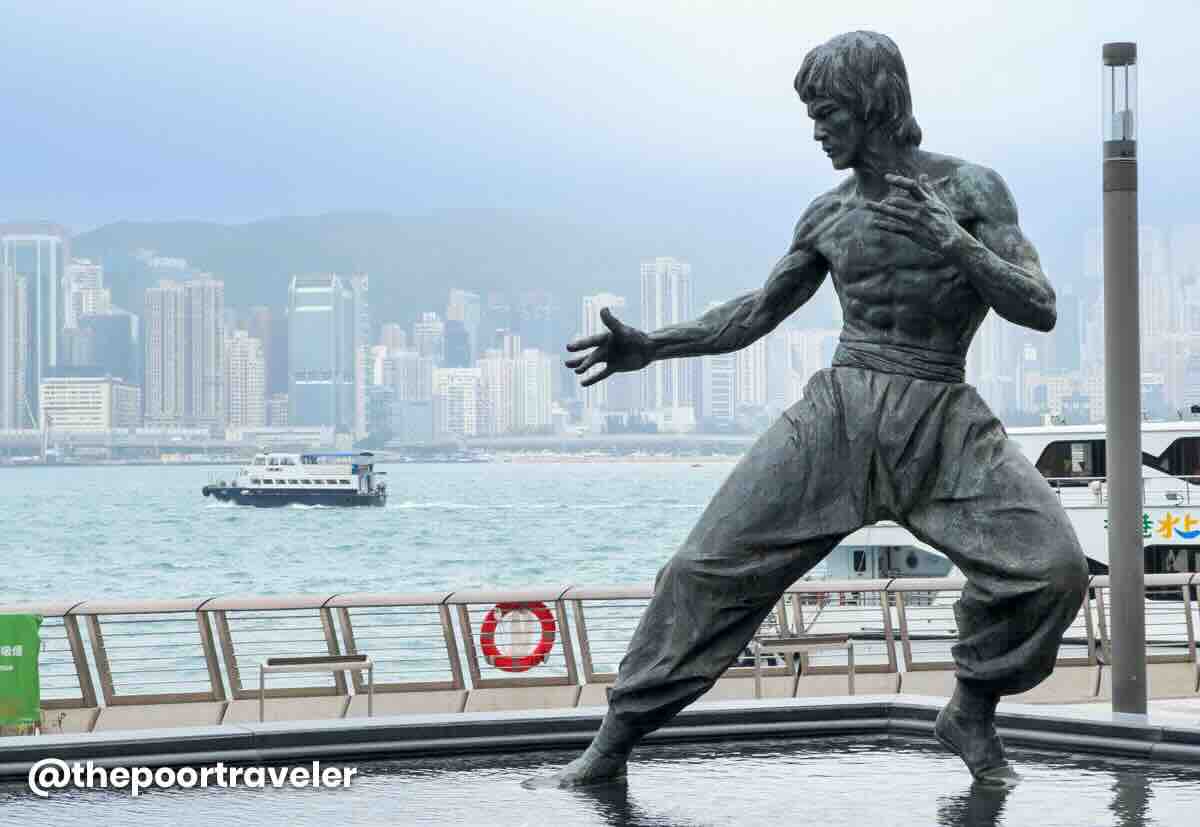
- Avenue of Stars. The Avenue of Stars is essentially a long waterfront walk, but that’s the point. It’s best enjoyed slowly, especially in the late afternoon when the light hits the harbor just right. Nearby stops like the Space Museum, Cultural Centre, and Star Ferry make it easy to turn this into a low-effort, high-reward afternoon.

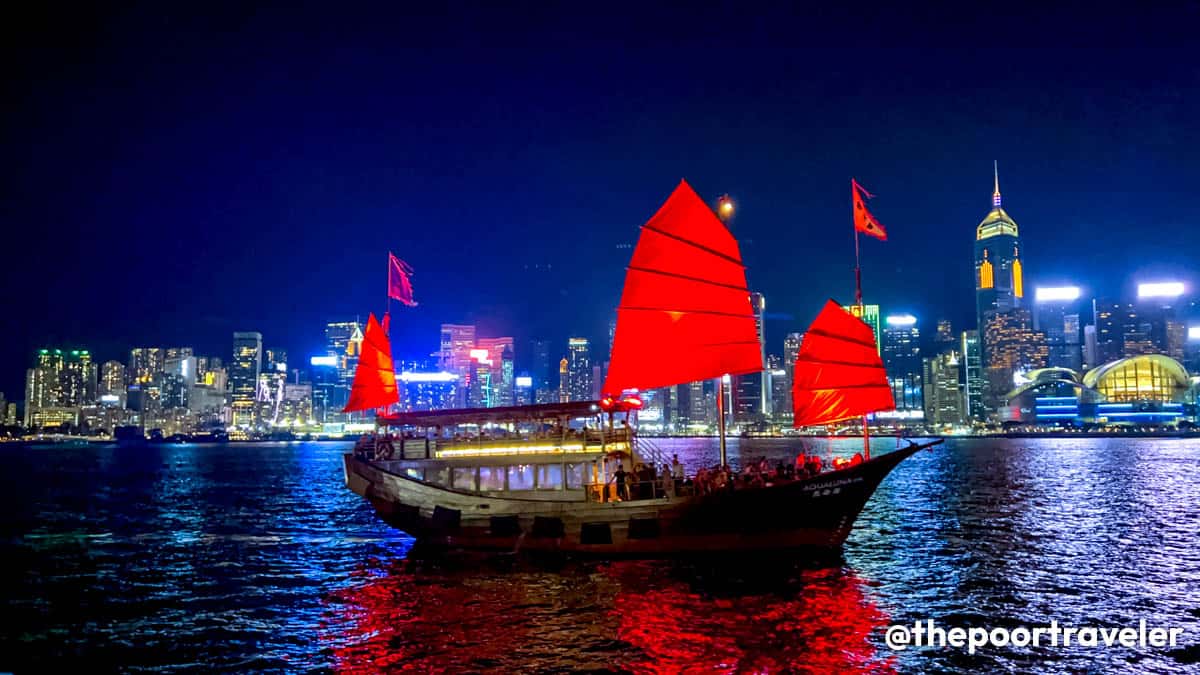
- Victoria Harbor Cruise. A harbor cruise is one of the few activities that lets you pause in a fast-moving city. It’s not thrilling, but it’s calming, especially after a long day of walking. You have a choice between the regular boats and the Aqua Luna traditional junk boat. Either way, you get to take in stellar views of both Kowloon and Central.

- M+ Museum. The museum focuses heavily on modern visual culture, design, and architecture rather than traditional fine art. Some exhibits are thought-provoking, others confusing, but the museum never feels static. Even if you don’t stay long, the building and its public spaces are worth the stop. Get Your Ticket Here! ✅
- Mong Kok Markets. They are crowded, loud, and very much still functional for locals. Prices aren’t always cheap, but the variety makes browsing worthwhile. Go in the evening, keep your expectations realistic, and treat it more as an experience than a shopping mission.
- Central. Central is Hong Kong at its most polished and efficient. It’s where offices, restaurants, galleries, and nightlife overlap without clear boundaries. Walking here gives you a better sense of how the city actually operates day to day. But you’ll also find historic, artful, and delicious corners!
- Aberdeen. Aberdeen offers a glimpse of Hong Kong’s older fishing culture, though much of it now exists alongside modern development. The floating restaurants and harbor views are interesting more as context than must-see attractions. It’s worth a short stop if you’re already in the southern part of Hong Kong, especially to understand how the city has evolved.

- Island Hopping (Cheung Chau, Peng Chau). These islands show a quieter, more residential side of Hong Kong that many visitors miss. Cheung Chau feels busy on weekends but still offers good food and scenic walking paths, while Peng Chau is slower and more local. Both are easy ferry rides away and work well as half-day breaks from the city.
Peng Chau - Macau Day Trip. Macau makes sense as a day trip if you’re curious about how different two neighboring cities can feel. You can travel to Macau by ferry or by bus. We have several articles about Macau, including things to do, where to stay, what to eat, and other tips.


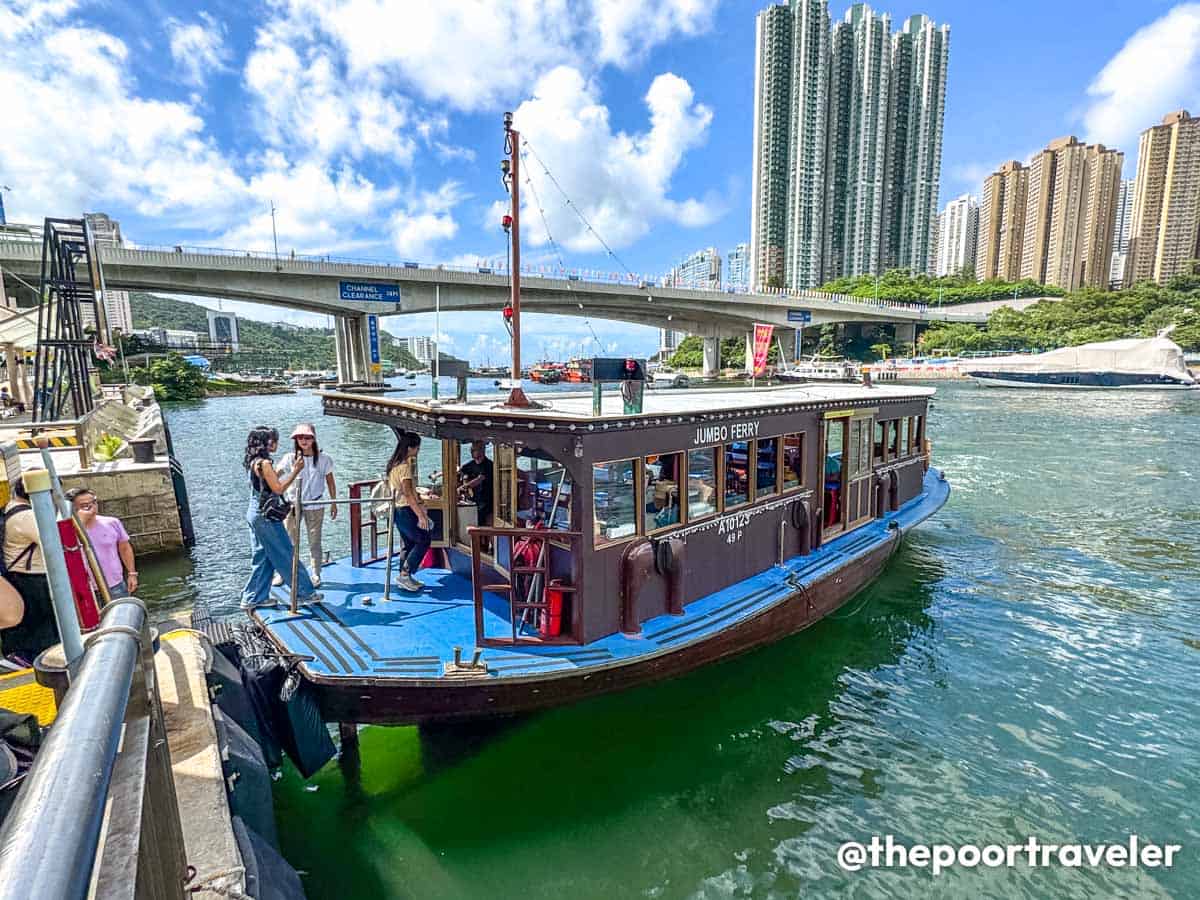
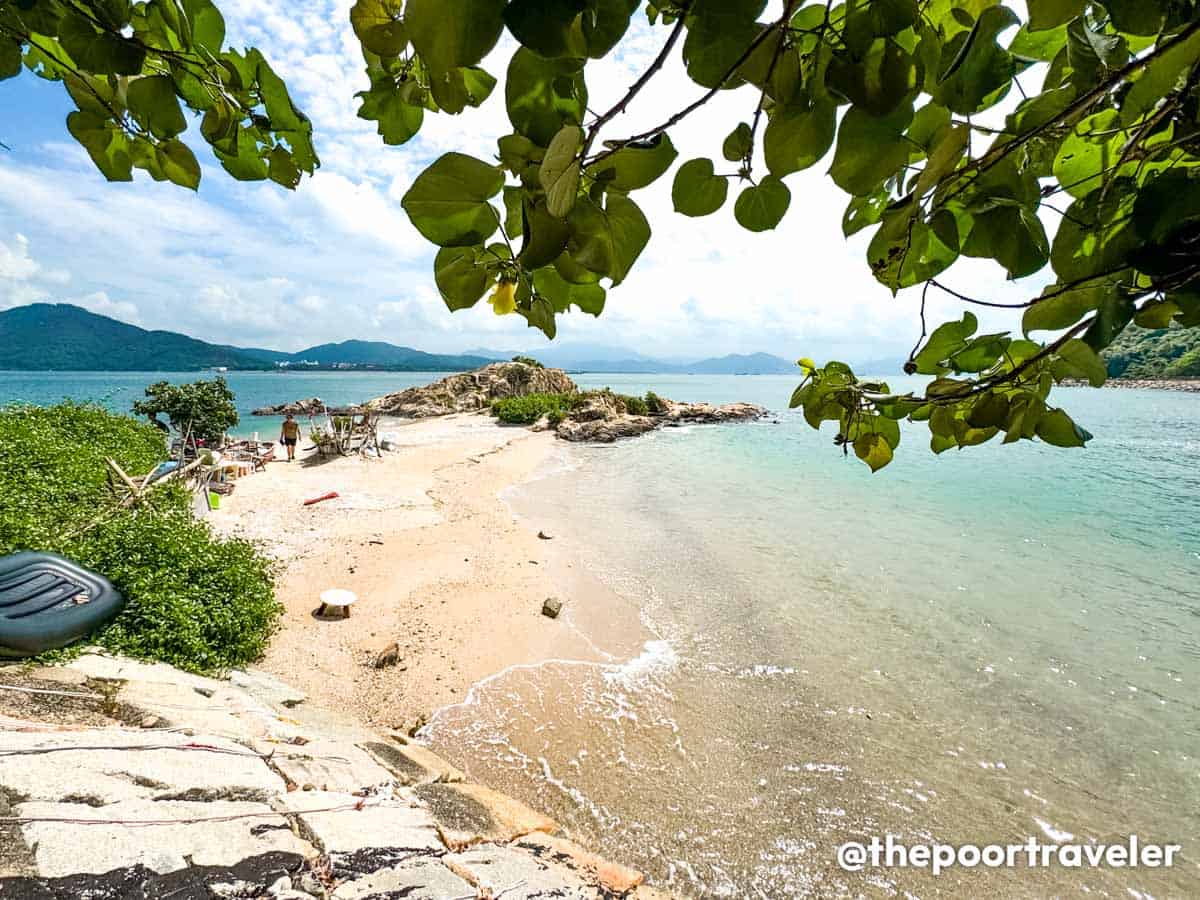
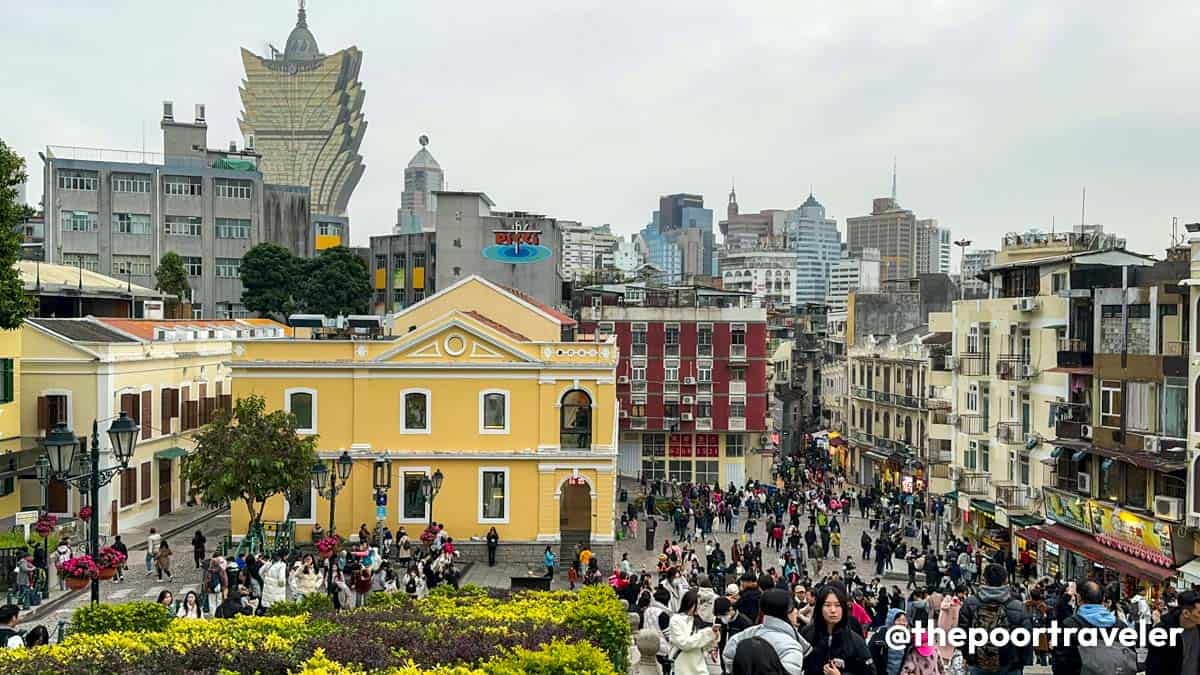
By the way, we also made articles related to this. You can find them here: HONG KONG FREE THINGS TO DO & HONG KONG OFF-THE-BEATEN-PATH ATTRACTIONS
SAMPLE HONG KONG ITINERARIES
Here are two sample Hong Kong itineraries: one for 4D/3N and the other for 5D/4N. You’ll also find a breakdown of expenses. All prices are in HK dollars (unless otherwise stated). Both itineraries assume you’re a party of two (2), splitting the cost of shared expenses evenly, and that you will be booking a hotel room for HKD 420 per night.
4-DAY 3-NIGHT ITINERARY: HONG KONG ONLY
Base: Central/Sheung Wan
PRE-TRIP EXPENSES:
Hotel: HK$ 630 (HK$ 420 x 3 nights, divided by 2 pax)
Internet: HK$ 27.95
Sub-Total: HK$ 657.95 (P4961)
DAY 1 – ARRIVAL & CENTRAL
07:10 AM – ETD Manila
09:45 AM – ETA Hong Kong Airport
11:00 AM – Withdraw cash, pickup Octopus card/SIM
11:30 AM – Bus A11 to Central, HK$ 41.90
12:30 PM – Hotel check-in or drop bags
01:00 PM – Lunch, HK$ 90
02:52 PM – Kennedy Town Happy Valley Tram, HK$ 3.3
03:04 PM – Alight at Murray Road, walk to Peak Tram
03:15 PM – Take Peak Tram & Sky Terrace, HK$ 162, Get Ticket Here! ✅
04:00 PM – Sky Terrace and Peak Galleria
07:00 PM – Take Peak Tram
07:30 PM – Walk around Central
08:00 PM – Tsim Chai Kee – HK$ 65
09:00 PM – Walk back to hotel, buy breakfast items HK$ 80
10:30 PM – Lights out
Sub-Total: HK$ 442.2 (P3335)
DAY 2 – HONG KONG DISNEYLAND
06:30 AM – Wake up call
07:45 AM – Buy drinks/snacks: HK$ 40
08:00 AM – MRT to Disney Resort Station, HK$ 27.9
09:00 AM – Hong Kong Disneyland, HK$ 600
See: Sample Hong Kong Disneyland Itinerary
11:30 AM – Lunch, HK$ 80
06:00 PM – Dinner, HK$ 140
09:30 PM – MTR back to hotel, HK$ 27.9
10:30 PM – Back at hotel
11:30 PM – Lights out
Sub-Total: HK$ 915 (P6899)
DAY 3 – KOWLOON
08:30 AM – Wake up call
09:40 AM – Man Mo Temple, FREE
10:22 AM – Take Tram to Jubilee Street, HK$ 3.3
10:30 AM – Walk to Tim Ho Wan, HK$ 70
12:05 PM – MTR to Kowloon Station, HK$ 10.6
12:10 PM – Walk to M+ Museum
12:30 PM – M+ Museum, HK$ 190, Book Here! ✅
03:50 PM – Premium water taxi, HK$ 50, Get Ticket Here! ✅
04:10 PM – K11 Musea, Avenue of Stars
06:30 PM – MTR to Jordan Station, HK$ 4.9
06:45 PM – Yuan Ji Dumpling, HK$ 80
08:15 PM – Temple Street or Mong Kok Night Market
10:00 PM – MTR to hotel, HK$ 13.2
11:30 PM – Lights out
Sub-Total: HK$ 422 (P3182)
DAY 4 – NGONG PING & DEPARTURE
08:00 AM – Wake up call & pack up
10:00 AM – Hotel check out + walk to MTR
11:00 AM – MTR to Tung Chung Station, HK$ 21.3
12:00 PM – Store bags in CityGate lockers, HK$ 80 (4 hours)
12:15 PM – Quick lunch, HK$ 47
12:30 PM – Ngong Ping 360 cable car, HK$ 228 (RT), Get Ticket Here! ✅
01:00 PM – Big Buddha and Po Lin Monastery
02:30 PM – Cable car ride back to Tung Chung
03:00 PM – CityGate Outlets Mall shopping (if time permits)
04:00 PM – Bus S1 to Airport, HK$ 3.7
04:15 PM – Flight check in
05:00 PM – Dinner, HK$ 60
07:15 PM – ETD Hong Kong Airport
Sub-Total: HK$ 440 (P3317)
TOTAL: HKD 2,877.15 (USD 369, EUR 314, SGD 470, PHP21,759)
The total is HKD 2,877.15 (USD 369, EUR 314, SGD 470, PHP21,759) PER PERSON, including all attractions, land/water transportation, and hotel but excludes airfare. This is the minimum that you will be spending if you follow this itinerary in the off-peak season.
If you’re a Filipino flying from Manila and you’re able to snag promo flight tickets at P5500 and you pay the P1620 travel tax, prepare a budget of at least PHP 28,879.
5-DAY 4-NIGHT ITINERARY: HONG KONG + MACAU DAY TRIP
If you have an extra day and you also want to visit Macau, insert this day trip itinerary and adjust the hotel costs.
PRE-TRIP EXPENSES:
Hotel: HK$ 840 (HK$ 420 x 4 nights, divided by 2 pax)
Octopus Card + 4G SIM: HK$ 27.95, Reserve Here! ✅
Sub-Total: HK$ 867.95 (P6545)
ADDITIONAL DAY – MACAU DAY TRIP
06:45 AM – Wake up call
08:00 AM – MTR to Tsim Sha Tsui Station, HK$ 10.6
08:15 AM – Walk to China Hong Kong City Terminal
09:30 AM – Bus to Macao, HK$ 180, Get Ticket Here! ✅
12:00 PM – Arrival in Macau, walk to Taipa Food Street
12:25 PM – Start Food Trip
– Sei Kee Café (share pork bun), MOP$ 25
– Café Vong Kei (iced coffee/milk tea), MOP$ 26
– Lao Day Beef Offal (share), MOP$ 29
– Lord Stow’s Bakery, MOP$ 11
– Mochi Macau, MOP$ 18
01:30 PM – Bus 33 to Almeida Ribeiro / OCBC, MOP$ 6
02:20 PM – Explore Senado Square and St. Paul Ruins
04:00 PM – Walk back to Praia De Hac Sá Bus Stop
04:12 PM – Bus 26A to Est.Do Istmo / Londoner, MOP$ 6
04:40 PM – The Londoner Macao
05:50 PM – The Parisian Macao
06:40 PM – The Venetian Food court: MOP$ 100
08:00 PM – Go to bus pickup point
08:35 PM – Bus to Hong Kong, HK$ 160, Get Ticket Here! ✅
11:00 PM – MTR Prince Edward to Hotel, HK$ 13.20
11:59 PM – Lights out
Sub-Total: MOP$ 595.2 (HK$ 578.24, P4357)
TOTAL: HKD 3,682.35 (USD 472, EUR 402, SGD 602, PHP 27,849)
If you insert this day trip into the previous itinerary, prepare to shell out at least HKD 3,682.35 (USD 472, EUR 402, SGD 602, PHP 27,849) per person, including all attractions, land/water transportation, and hotel but excludes airfare.
If you’re traveling from the Philippines and you add the cost of promo flights and travel tax, this itinerary should set you back at least PHP 34,969.
IMPORTANT! These are the minimum budgets to prepare. But please note:
- Add a buffer (even as low as HKD 200) to cover possible price movements, currency exchange adjustments, and other expenses we might have missed. These do not include personal purchases (shopping budget) and alcohol.
- Prices of some items including hotels and Disneyland can skyrocket depending on the season, demand, and day of the week.
- These itineraries should not be taken as official travel advice. Just use these as a guide in building your own. Feel free to tweak to match your bookings, availability, schedule and preferences.
FREQUENTLY ASKED QUESTIONS ABOUT HONG KONG
When is the best time to visit Hong Kong?
We have entered Hong Kong at least 15 times. I’m not saying this to brag, but to let you know that whatever information we’re going to share with you, it’s based on real and varied experiences.
The months of October to March are a good time to tour Hong Kong.
Most online publications will tell you that the most ideal time is October-December, when the temperature remains comfortable and cool, and the skies are sunny.
That said, it doesn’t mean that it’s like that every day. My first Hong Kong visit was in October, and it was slightly raining the entire time. It wasn’t a heavy downpour, more like constant drizzling. Then, years later, on our last October visit, there was a typhoon, and the city was under Signal #8. So you’ll really never know these days.
January to March are the driest months. It can get too cold, but to be honest with you, as someone who grew up in the tropics, I love winter in Hong Kong. My most enjoyable visits in Hong Kong were actually in January and February, and I loved it, mainly because I really enjoy cold and dry winter months.
But If you hate big crowds, look away from the days leading to the Chinese New Year, usually in late January or early February.
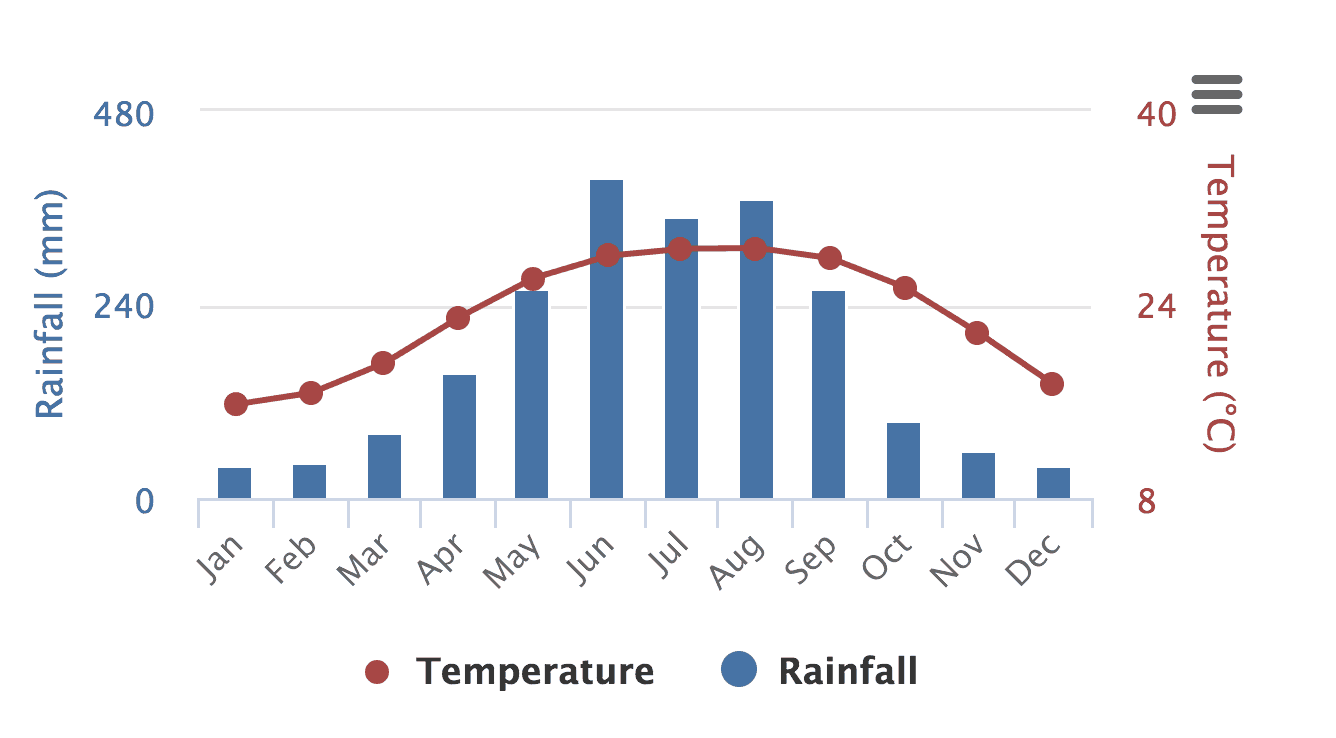
Avoid late May to September if you can. These are the wettest months, sometimes battered by typhoons brewed by the Pacific.
I have also been to Hong Kong in May and June, and it was hot and rainy both times. Not good months to visit.
Is tipping customary in Hong Kong?
Tipping is not required when dining, because most restaurants automatically include a 10% service charge in the bill. If there’s no service charge, leaving 5–10% is appreciated but entirely optional.
For casual street food, small cafes, or takeaway, no tipping is expected.
In hotels, tipping is customary. Tip the bellhop or maid HK$ 20 to HK$ 40 for their service.
Taxi drivers don’t expect to be tipped. But you can always round up the bill to show appreciation.
What is the power socket used in Hong Kong?
Types G and D are used, with a standard voltage of 220V at a frequency of 50Hz. Type G is the most common. Some hotels have universal sockets that can accommodate most plugs, but best to bring a universal travel adapter.
Where to exchange money in Hong Kong?
Aside from the airport, there are a lot of money changers in Hong Kong’s Tsim Sha Tsui and Central areas. But we usually just withdraw from ATMs. It’s important to note that most of them also charge a transaction fee.
Do I need a visa to visit Hong Kong?
For Filipino passport holders, you do not need a visa for tourist or short business visits up to 14 days. All you need is a valid passport, proof of onward/return travel, and evidence of accommodation and sufficient funds when you arrive.
Hong Kong operates under a different system from mainland China thanks to the “One Country, Two Systems” framework. Hong Kong maintains its own immigration and border controls, legal system, and visa policies, which is why entry requirements are often very different from those of mainland China. This means many nationalities who need a visa for China can still enter Hong Kong visa-free for short stays, making it much easier to visit.
Most international visitors do not need to apply for a visa in advance — Hong Kong has a pretty liberal visa-free policy allowing citizens of about 170 countries and territories to enter without a visa for short stays (usually between 7 and 180 days, depending on nationality).
Is it possible to enter Hong Kong and exit Macau?
YES, if what you mean is your outgoing flight is to Hong Kong and your return/onward flight is from Macau, and you’re crossing the border legally.
Technically speaking, what you will be doing is not “enter Hong Kong-exit Macau”. You will actually be entering Hong Kong then exiting Hong Kong, crossing the border, then entering Macau then exiting Macau, because you’ll be clearing Immigration checks on both sides.
Is it possible to enter Macau and exit Hong Kong?
YES, if what you mean is your outgoing flight is to Macau and your return or onward flight is from Hong Kong, and you’re crossing the border legally.
Technically speaking, what you will be doing is not “enter Macau-exit Hong Kong”. You will actually enter Macau then exit Macau, cross the border, then enter Hong Kong then exit Hong Kong, because you’ll be clearing Immigration checks on both sides.
How to avoid being offloaded from my Hong Kong flight?
Hong Kong is a hotspot for Filipino illegal workers. Hence, both the Philippine and Hong Kong Immigration bureaus can be stricter to Pinoys traveling to Hong Kong. It’s also one of their measures to avoid human trafficking.
If you’re worried about getting offloaded or if it’s your first time to travel abroad, read this: HOW TO AVOID GETTING OFFLOADED
Is Hong Kong safe?
Yes, Hong Kong is very safe even at night, even if you’re alone. At least, the areas that tourists frequent are. Always use common sense when exploring, follow the rules, and don’t leave your things unattended.
However, there are things you need to watch out for if you plan on shopping in Hong Kong. There are a number of scams in Hong Kong targeting foreign shoppers. Some shops sell fake products. Some electronics stores have brand new, genuine gadgets on display, but after paying, they’ll hand you units that are either used or of an older model. If you’re interested to purchase gadgets, choose a reputable shop.
Protect your finances when traveling!
Getting a travel insurance is optional, but we highly recommend this, especially when traveling abroad. Travel can be unpredictable, and though we hope we’ll never use it, having it gives us peace of mind in case of unexpected delays, cancellations, or emergencies.
For international destinations, consider PGA Sompo’s TravelJOY Plus insurance. You can GET IT HERE. Don’t forget to use WORTHIT for a special affordable rate.

Join The Poor Traveler Support Group
✅ If you have any questions or need travel tips, feel free to post them to the TPT Support Group. The members are very helpful. This Facebook support group has been around for a long time, and many members have found travel buddies through it. You can join too! Just visit The Poor Traveler Support Group. Note that this is different from The Poor Traveler Facebook page.
Updates Log
2026 1 31 – First uploaded
Edited by: Asta Alvarez